
Precision Thin Section Bearings: Compact, High-Performance Design
News & Updates
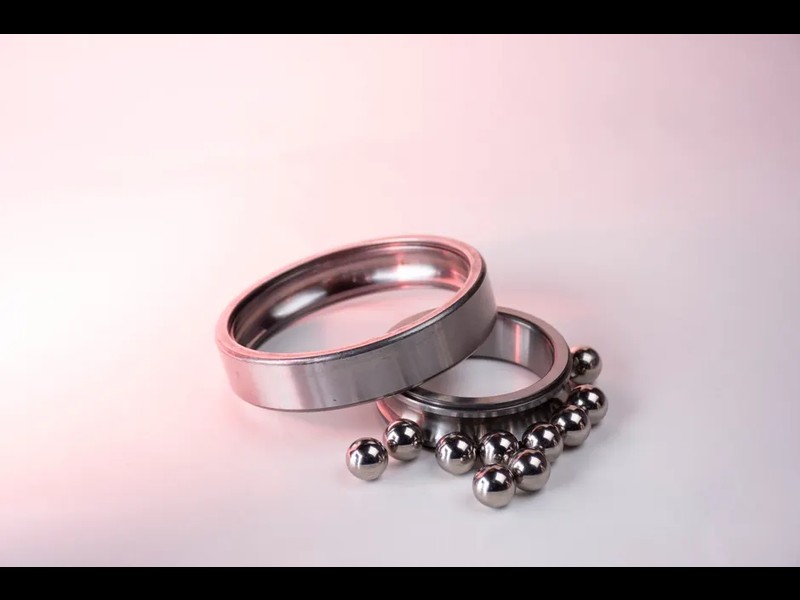
Precision Thin Section Bearings: Compact, High-Performance Design
What Are Precision Thin Section Bearings?
Precision thin section bearings are specialized rolling-element bearings distinguished by an exceptionally low cross-section-to-bore-diameter ratio. Unlike conventional bearings, where cross-sectional dimensions increase proportionally with bore size, thin section bearings maintain a consistently slim profile regardless of shaft diameter. This makes them indispensable where space is at a premium and weight reduction is critical, yet rotational accuracy cannot be compromised.
The defining feature is a near-square cross-section that remains constant across a wide range of bore sizes. A thin section bearing may occupy less than half the radial space of a standard deep-groove ball bearing while delivering comparable performance in running accuracy, friction, and fatigue life. This advantage has made thin section bearings the default choice in robotics, medical devices, aerospace actuators, semiconductor equipment, and optical systems.
FIJ Industrial Technology Limited manufactures precision thin section bearings to ABEC-1 through ABEC-7 tolerance grades, using vacuum-degassed chrome steel and, where specified, stainless steel for corrosive or cleanroom environments. Every bearing undergoes 100% dimensional inspection and dynamic noise testing before shipment.
Key Advantages of Thin Section Bearing Design
Radical Space and Weight Reduction
The most immediate benefit is the dramatic reduction in assembly envelope. Designers can specify larger shaft diameters for improved stiffness without increasing the housing footprint. In collaborative robot joints, where every millimeter counts, this translates to more compact end-effectors and reduced motor sizing. Weight savings of thirty to fifty percent compared to conventional assemblies are typical.
Simplified Adjacent Component Design
Because thin section bearings maintain a constant cross-section, housing, shaft shoulder, and retaining features can be standardized across different bore sizes. This reduces part number proliferation, simplifies inventory management, and lowers tooling costs. Proven housing geometries can be reused across multiple product variants, accelerating time to market.
Low and Predictable Running Torque
Tightly controlled raceway geometry and ball complement produce low starting and running torque with minimal variation across the full rotation. This is essential in servo-driven systems, gimbals, and optical stages where smooth motion directly affects accuracy and control loop stability.
Exceptional Stiffness-to-Weight Ratio
The optimized internal geometry, combined with high-grade bearing steel, delivers excellent stiffness-to-weight performance. In aerospace applications, where every gram carries a cost penalty, this enables lighter structures without sacrificing rigidity or pointing accuracy.
FIJ Bearing Thin Section Product Range
FIJ offers six distinct thin section bearing configurations optimized for specific load and mounting requirements. All are available in inch and metric bore dimensions, with multiple seal and lubrication options.
Supper Thin Section Bearing
The supper thin section bearing is the most compact option in the FIJ portfolio, with an ultra-low cross-section for applications where radial space is at an absolute minimum. Despite its slim profile, it maintains high running accuracy for light to moderate loads. Typical deployments include medical infusion pumps, miniature encoders, and compact optical mounts.
KAA Configuration — Angular Contact
KAA bearings feature a high contact angle design, the preferred choice when axial loads predominate or axial rigidity is critical. The split inner ring construction in larger bores permits a higher ball complement for increased load capacity. Common applications include lead screw supports, vertical shafts, and high-speed spindles where thrust loads demand precise management.
KA Configuration — Single Radial Contact
The KA configuration offers a single row of balls in a deep-groove raceway, accommodating radial loads and moderate axial loads in both directions. KA bearings deliver the optimal balance of load capacity, speed capability, and cost-effectiveness, serving as the default recommendation for pulleys, idler shafts, light-duty gearboxes, and rotary sensor mounts.
KB Configuration — Duplex Pair
KB bearings are supplied as matched duplex pairs, ground to precise axial standout values that generate controlled preload when clamped together. This preload eliminates internal clearance, dramatically increasing stiffness and running accuracy. KB pairs are the go-to solution for machine tool spindles, precision rotary tables, and CMM axes.
KC Configuration — Four-Point Contact
KC bearings use a four-point contact geometry that enables a single bearing to carry radial, axial, and moment loads simultaneously. The gothic-arch raceway creates two distinct contact angles, functioning like a duplex pair in a single-row envelope. This excels in robot wrists, radar pedestals, and antenna mounts where combined loading is the norm.
KD Configuration — Separable Design
KD bearings feature separable inner and outer rings for easy installation when shaft and housing must be assembled independently. The fill-slot construction permits a higher ball count for superior radial load capacity. KD bearings are specified for rotary unions, indexing tables, and material handling turntables.
Material and Manufacturing Excellence
FIJ precision thin section bearings are manufactured from vacuum-degassed AISI 52100 chromium steel, heat-treated to 58–64 HRC. This ensures excellent rolling contact fatigue resistance, dimensional stability across operating temperatures, and consistent performance over extended service. The vacuum-degassing process minimizes non-metallic inclusions that act as fatigue initiation points.
For corrosive or cleanroom environments, FIJ offers AISI 440C martensitic stainless steel with corrosion resistance comparable to 304 stainless while retaining bearing-grade hardness. Hybrid variants with silicon nitride ceramic balls are available for high-speed or electrically insulated requirements.
Production features CNC grinding, super-finishing of raceways, and laser-marked identification for traceability. Quality assurance includes sub-micron roundness measurement, radial runout verification, and vibration analysis per ISO 15242.
Application Industries
- Robotics and Automation: Collaborative robot joints, end-of-arm rotary axes, and AGV steering assemblies benefit from compact profile and low torque.
- Medical and Laboratory Equipment: CT scanner gantries, surgical robot arms, and centrifuge spindles demand the cleanliness and precision FIJ bearings deliver.
- Semiconductor Manufacturing: Wafer handling robots and vacuum-compatible positioning systems rely on particulate-free operation with sub-arc-minute accuracy.
- Aerospace and Defense: Gimbal assemblies, antenna platforms, and flight control actuators leverage weight savings and high stiffness for stringent SWaP targets.
- Optical and Metrology Equipment: Theodolite mounts, laser scanning heads, and interferometer stages use thin section bearings for smooth, cog-free motion.
- Packaging and Converting Machinery: Rotary die-cutters, labeling heads, and filling turrets depend on durability and repeatability in high-throughput environments.
Selection Criteria for Engineers
- Load Spectrum Analysis: Determine radial, axial, and moment loads to choose between KA, KAA, KC, or KD configurations based on the dominant load components.
- Envelope Constraints: Cross-reference available space with FIJ catalog dimensions for the right cross-section profile and adequate clearance.
- Speed Requirements: Verify limiting speed exceeds application maximum with appropriate safety margin, accounting for lubrication and temperature.
- Accuracy Class: ABEC-5 and ABEC-7 suit precision motion systems; ABEC-1 and ABEC-3 serve general industrial needs.
- Environmental Factors: Specify material, seals, and lubrication for temperature extremes, moisture, chemicals, or particulates.
- Mounting Configuration: Choose separable (KD), preloaded duplex (KB), or single-bearing (KA, KAA, KC) based on assembly and stiffness needs.
Why Choose FIJ for Thin Section Bearings
FIJ brings decades of bearing manufacturing expertise to every precision thin section bearing. Our engineering team validates bearing selections against real-world conditions, supporting projects from design review through production ramp-up.
Key differentiators include full traceability from raw material heat number through finished product, competitive lead times from vertically integrated turning, heat treatment, grinding, and assembly, plus flexible minimum order quantities for both prototypes and volume production. Every bearing is individually inspected with certificates of conformance provided as standard.
For OEM buyers and maintenance professionals, FIJ offers consolidated shipments, custom packaging, and a technical team that resolves questions within one business day. FIJ precision thin section bearings deliver the performance, consistency, and support your application demands.
Conclusion
Precision thin section bearings enable compact machinery design by maintaining a constant cross-section independent of bore diameter. FIJ’s comprehensive range — spanning supper thin, KAA, KA, KB, KC, and KD configurations — gives engineers the flexibility to optimize for load capacity, stiffness, assembly convenience, or space savings without compromise.
To discuss your requirements or request dimensional drawings and load rating data, reach out to the FIJ engineering support team for bearing selection assistance and sample fulfillment.