
N1014RXZTPKRCC9P4 cylindrical roller bearing 70×110mm
News & Updates
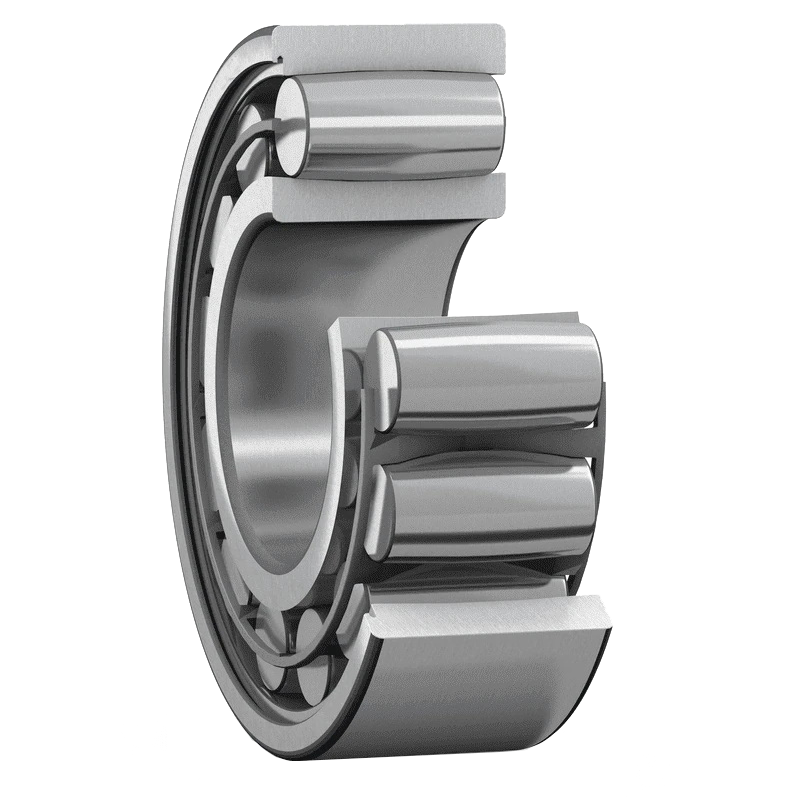
N1014RXZTPKRCC9P4 cylindrical roller bearing 70×110mm
Where a standard 70 mm single-row cylindrical roller bearing is often chosen for moderate speed and high radial stiffness, the N1014RXZTPKRCC9P4 is a different tool for the same shaft envelope: it trades some general-purpose tolerance for ultra-high-speed capability, a 1/12 tapered bore and an outer-ring-guided PEEK cage. That difference is exactly why failure analysis has to start with the application, not just the damaged part.
At a glance
- Parameter: Value
- Dimensions (d×D×B): 70 × 110 × 20 mm
- Weight: 0.563 kg
- Series: N10 series (N10..RXZTPKRCC9P4)
Design Intent and the Specs That Drive Failure Symptoms
The N1014RXZTPKRCC9P4 is a 70×110×20 mm super-precision cylindrical roller bearing from the N10..RXZTPKRCC9P4 series. Its 27613 N dynamic and 28368 N static ratings are not the whole story; the 14888 r/min reference speed and 19960 r/min limiting speed indicate a bearing set up for high-speed, high-accuracy spindles and gearbox shafts where skidding and cage stability matter more than brute load capacity. For the full family, see Cylindrical roller bearings, single row, super-precision category.
| Parameter | Value |
|---|---|
| Dimensions (d×D×B) | 70 × 110 × 20 mm |
| Weight | 0.563 kg |
| Series | N10 series (N10..RXZTPKRCC9P4) |
| Cage | TP = Outer ring guided PEEK cage |
| Bore | KR = 1/12 Tapered bore |
| Basic dynamic load rating, radial (Cr) | 27613 N |
| Basic static load rating, radial (Cor) | 28368 N |
| Reference speed | 14888 r/min |
| Limiting speed | 19960 r/min |
The suffix is not decoration. Use our bearing number reference to decode RX, TP, KR and P4 before you compare a replacement, because a visually similar 70×110×20 bearing may have a different cage, bore taper or internal clearance.
Failure Mode 1: Roller Skidding and Raceway Smearing
At the speeds this bearing can tolerate, light radial load is not a safe condition. Rollers can skid instead of roll, wiping the oil film and leaving a dull, smeared or discolored raceway. The damage often appears on the unloaded side of the outer ring and is misread as contamination.
Root causes are usually a minimum-load shortfall, aggressive acceleration, low oil viscosity at operating temperature, or a lubrication feed that looks adequate at low speed but starves the contact at 14888 r/min and above. Avoid it by confirming the minimum load at the highest speed, ramping speed with the oil supply already stable, and checking oil flow rather than relying on sump level. A bearing that has smeared once will not recover its precision by cleaning alone.
Failure Mode 2: PEEK Cage Wear and Outer-Ring Guidance Damage
The TP cage is outer-ring guided, which gives stable roller guidance in high-speed operation but makes the outer ring guide surface a wear indicator. If the cage shows polished pockets, black deposits, or fretting at the guide lands, do not simply replace the cage.
Look for misalignment between housing and shaft, oil starvation during warm-up, excessive centrifugal loading from overspeed, or thermal growth that closes the guide clearance. PEEK is dimensionally stable and chemically resistant, but it is not a heat sink. Verify oil flow to the outer ring, check housing bore alignment, and keep the bearing within its 19960 r/min limiting speed. Substituting a steel cage without a full speed and load review can move the failure elsewhere.
Failure Mode 3: Taper-Bore Mounting Error and Raceway Misalignment
The KR designation means a 1/12 tapered bore, so mounting quality decides bearing life. A poor shaft taper contact pattern, excessive drive-up, or a locknut that is not square can distort the inner ring and load the rollers unevenly. The result is often a single raceway band, high temperature, and premature axial vibration.
Check taper contact with a blue compound, measure the axial drive-up rather than guessing by feel, and confirm the shaft taper geometry before fitting the N1014RXZTPKRCC9P4. On a super-precision bearing, a small mounting error is not a small error; it is a preload change. If the old bearing shows a narrow contact path or a burned band, inspect the shaft and housing before installing the replacement.
Failure Mode 4: Lubrication Starvation and Contamination
High-speed cylindrical roller bearings are less forgiving of dirty oil than general-purpose bearings. Particles that are small enough to pass a coarse filter can still dent raceways and start a fatigue spill. Water or coolant ingress is worse: it breaks the oil film and leaves corrosion marks that act as stress raisers.
Use filtration and flow rates matched to the application, not just the bearing envelope. Confirm that oil reaches the rollers during acceleration, that drain paths are open, and that the housing is sealed against washdown or process mist. When a failed bearing shows axial scoring, rust spots or dull grey bands, inspect the lubrication circuit before blaming the bearing.
Failure Mode 5: Fretting, Creep, and Housing Fit Problems
A 20 mm wide bearing at high speed can fret on the shaft or creep in the housing if the fit is too loose or the axial clamp is inadequate. Fretting looks like reddish-brown oxide dust near the abutment; creep shows as polished or worn housing seats. Both destroy the intended load path.
Check housing roundness, shaft shoulder squareness, and clamp force. Thermal growth should be calculated for the actual spindle or gearbox, not copied from a catalog. If the housing seat has been brushed or scraped during a previous repair, the replacement bearing may start with a poor fit and fail for a reason that is not visible on the bearing itself.
Troubleshooting and Prevention Checklist
Use the failure pattern to drive the repair, not just the part number. The following checks cover the most common repeat failures:
- Confirm actual radial load and minimum load at the highest speed; do not size only from Cr.
- Inspect shaft taper contact and measure axial drive-up for the 1/12 bore.
- Verify oil flow, viscosity, filtration, and drain path before restart.
- Check housing and shaft fits for roundness, fretting, and axial clamping.
- Review acceleration profiles, warm-up, and vibration signatures after repair.
- Replace with the same N1014RXZTPKRCC9P4 configuration unless engineering approves a change.
For replacement or application review, contact FIJ Bearing. Request a quote for the N1014RXZTPKRCC9P4 with your shaft and housing drawing, speed profile and lubrication method so the recommendation matches the duty, not just the dimensions.