
JLM506849 taper roller bearing 55x90mm
News & Updates
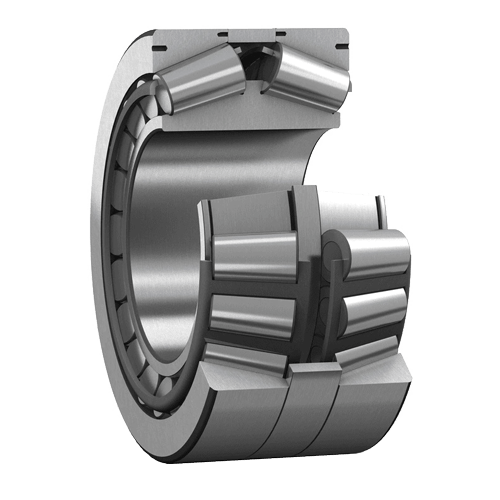
JLM506849 taper roller bearing 55x90mm
What applications suit the JLM506849/JLM506810/LM506849XS/LM506810ES bearing, and what should a buyer check before ordering? It is a 55×90×52 mm double-row tapered roller bearing supplied as a matched SET-RIGHT assembly, so it is a practical candidate for medium-duty shafts and hubs that need combined radial and axial support with a controlled setting. The answer is not simply “fit it where the envelope matches”; the application, load direction, speed, lubrication, and mounting shoulders all need to line up.
At a glance
- Number: JLM506849/JLM506810/LM506849XS/LM506810ES
- Type: Tapered Roller Bearings Double Row – SR type (Matched Bearing Assembly, SET-RIGHT) Metric
- Inside diameter d: 55 mm
- Outside diameter D: 90 mm
What the 55×90×52 Envelope Tells You
On a drawing, the headline figures are simple: 55 mm bore, 90 mm outside diameter, and 52 mm assembly width. Those figures define the space envelope, not the load capacity. In a double-row tapered roller bearing, the effective centre and the cup and cone shoulder positions matter just as much as the three headline dimensions. Check the housing shoulder, shaft shoulder, fillet radii, and any shoulder undercut before you commit to a purchase.
| Number | JLM506849/JLM506810/LM506849XS/LM506810ES |
|---|---|
| Type | Tapered Roller Bearings Double Row – SR type (Matched Bearing Assembly, SET-RIGHT) Metric |
| Inside diameter d | 55 mm |
| Outside diameter D | 90 mm |
| Thickness width B | 52 mm |
| Number of rows | Double row |
| Unit of measurement | Metric (J) |
| Interchange | JLM506849/JLM506810+LM506849XS-LM506810ES |
The 52 mm width is especially important because this is a matched double-row assembly rather than two unrelated single-row bearings. The width may include the setting geometry and spacer arrangement, so do not assume you can substitute two narrower bearings without checking the shaft and housing stack. If the drawing calls for the original European design, confirm the mounting dimensions against the current drawing rather than relying only on the model string.
Operating Conditions That Favour a Double-Row Tapered Roller Bearing
A double-row tapered roller bearing is usually chosen when a shaft needs support in both radial and axial directions and the bearing arrangement must be reasonably stiff. The two rows share the load, which can help with overturning moments and with shaft deflection in compact envelopes. It is not an automatic upgrade for every application; if the load is purely radial and the speed is high, a different bearing type may be more efficient.
This design is a metric SR-type matched assembly. SR and SET-RIGHT descriptions point to a setting arrangement intended to simplify installation, but they do not remove the need to verify preload, end play, and thermal growth. Medium-speed gearbox shafts, axle pinion supports, pulley hubs, and industrial wheel-hub assemblies are typical places to start the evaluation. High-speed continuous operation, severe shock, or heavy contamination requires a more detailed review of lubrication, sealing, and bearing internal clearance.
Temperature is another practical limit. A bearing that runs warm will change its internal setting, so the housing material, shaft material, and expected operating temperature should be considered together. If the application has a wide temperature swing, the setting must be checked at the expected running condition, not only at room temperature.
Where This Matched Assembly Is a Sensible Candidate
The bearing sits within our Double row taper roller bearings category as a compact matched assembly for medium-duty rotating equipment. It is a sensible candidate for gear reducer output shafts, differential and axle pinion supports, conveyor pulley hubs, industrial wheel hubs, and similar assemblies where the bearing envelope is fixed and the shaft needs combined support.
It can also be considered for retrofit work where the original arrangement used a matched double-row tapered set and the surrounding housing is still in good condition. In those cases, the bearing is only one part of the system: the shaft fit, housing fit, seal condition, lubrication path, and axial clamping all affect service life. A bearing that is correct on paper can still fail early if the housing shoulder is worn or the shaft seat is undersized.
Do not select it by outside diameter alone. A 90 mm outside diameter and 52 mm width may fit the space, but the internal geometry and load lines must match the shaft arrangement.
Selection Checks Before You Place the Order
Use the following checks as a pre-order review. They are written for buyers and maintenance engineers who need to confirm that the JLM506849/JLM506810/LM506849XS/LM506810ES is the right replacement, not just a dimensional look-alike.
- Confirm the envelope and shoulders: verify 55 mm bore, 90 mm outside diameter, 52 mm width, fillet radii, and shoulder heights against the drawing.
- Map the load spectrum: record radial load, axial load in both directions, shock loads, and the expected duty cycle. A double-row set is useful for combined loads, but the load must be shared correctly across both rows.
- Check the speed and lubrication: confirm the operating speed, oil or grease viscosity, re-lubrication interval, and whether the bearing will run in a splash, circulation, or sealed-for-life system.
- Review the setting: identify the required preload or end play, the thermal growth, and the method used to set the assembly. Matched does not mean that every housing can be assembled without measurement.
- Verify fits and clamping: check shaft and housing tolerances, axial clamp load, spacer condition, and locking method. Loose or over-clamped assemblies change the internal setting.
- Confirm interchange and documentation: compare the full model, interchange string, and drawing revision. The bearing number reference can help decode the number, but the drawing remains the final authority.
- Plan sealing and contamination control: inspect seal grooves, breathers, washdown exposure, and debris ingress risk. Contamination is a common reason for premature tapered roller bearing damage.
If any of these items is unknown, ask for the operating data before ordering. A short technical review is cheaper than a premature failure in a gearbox or hub.
Setting, Installation, and Running-In Notes
Treat a matched double-row assembly as a set. Keep the components together, keep them clean, and do not mix parts from another set unless the manufacturer explicitly permits it. Before mounting, check that the shaft and housing are deburred, clean, and free from raised metal. Apply lubricant to the bore and outside diameter according to the mounting procedure, then press or heat only in the approved way.
Setting is the step where many otherwise correct bearings are lost. Follow the specified preload or end play, measure at the correct temperature, and recheck after the assembly has run and cooled. For a SET-RIGHT style assembly, the aim is to reduce guesswork, not to skip measurement. A dial indicator, a controlled clamp, and a clean work area are basic requirements.
After running-in, check for temperature rise, abnormal noise, and lubricant condition. Early changes in sound or heat often indicate a setting or lubrication problem before visible damage appears.
Interchange, Numbering, and Drawing Checks
The interchange string shown in the table is JLM506849/JLM506810+LM506849XS-LM506810ES. That string is useful for cross-checking a quote, but it should not replace the drawing and the application data. The J prefix indicates a metric unit in this listing, and the double-row SR-type description tells you that the assembly is matched and set as a unit. Confirm that the replacement uses the same internal geometry and setting method, especially if the original European design is being replaced in a critical shaft.
When comparing offers, ask for the full model, dimensions, number of rows, setting method, and documentation. A lower-cost bearing with the same bore and outside diameter may not share the same load rating, internal clearance, or mounting width. For traceability, record the JLM506849/JLM506810/LM506849XS/LM506810ES number, the date code, and the assembly serial number if one is available.
Practical Ordering Summary and Quote Request
In summary, the JLM506849/JLM506810/LM506849XS/LM506810ES is a 55×90×52 mm double-row tapered roller bearing for applications that need a compact, matched assembly and combined radial and axial support. It suits medium-duty gearbox, axle, pulley, and hub arrangements when the load, speed, lubrication, and setting have been checked. The most common ordering mistakes are fitting by envelope only, ignoring shoulder dimensions, and assuming that matched parts need no setting checks.
For a quotation or technical review, send the drawing, operating load and speed, lubrication method, and required setting to FIJ Bearing. Our team can confirm the configuration and help you compare it with the existing assembly.
Request a quote from FIJ and confirm your application details before ordering.