
FCDP80112400/YA6 cylindrical roller bearing 400×560mm
News & Updates
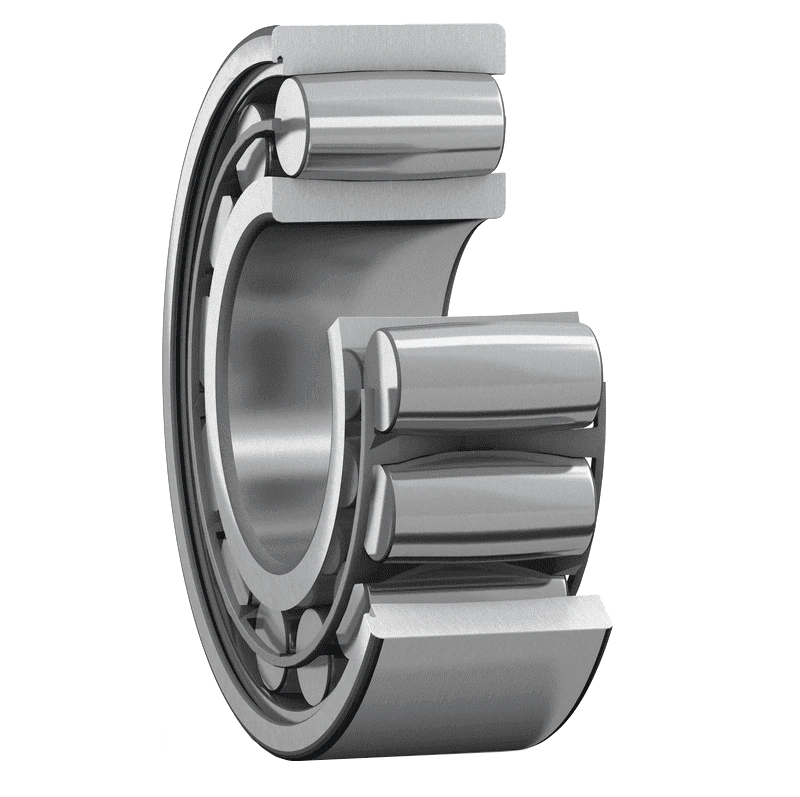
FCDP80112400/YA6 cylindrical roller bearing 400×560mm
The most surprising number on the FCDP80112400/YA6 datasheet is not the 12,920 kN static rating. It is 400 mm: the bearing’s width equals its 400 mm bore. That coincidence is a useful design clue. In a four-row cylindrical roller bearing, width is not packaging slack; it is the axial space needed for four roller paths, stiff inner and outer ring sections, and a pin-type cage that keeps a very large roller complement aligned under rolling-mill loads.
At a glance
- Specification: Value
- Bore diameter d: 400 mm
- Outside diameter D: 560 mm
- Width B: 400 mm
Why a 400 mm Width on a 400 mm Bore Changes the Design Brief
At 400 × 560 × 400 mm, the FCDP80112400/YA6 is a compact-diameter, wide-section bearing. The 80 mm radial section between bore and outside diameter is modest for a bearing that carries four rows of rollers. The load path therefore depends on generous axial width, not on a thick ring wall. For the buyer, that means the housing shoulder, chock width and axial clamping plan must be checked before price is discussed. A bearing that fits the shaft and housing bore but lacks the correct axial support can still misalign its roller paths.
The 322 kg unit weight is another practical specification. It is not simply a shipping number. It sets the lifting method, the assembly fixture, and the handling risk during inspection. A four-row rolling-mill bearing of this size should be moved with controlled lifting points and kept square during insertion; twisting a heavy cage assembly can damage roller guidance before the bearing ever runs.
Reading the 400×560×400 mm Envelope Like a Mounting Engineer
The dimensional envelope is the first filter in any replacement decision. Bore, outside diameter and width must match the drawing, but so must fillet radii, shoulder heights and cage clearance. The table below separates the headline values from the application-critical details.
| Specification | Value |
|---|---|
| Bore diameter d | 400 mm |
| Outside diameter D | 560 mm |
| Width B | 400 mm |
| Weight | 322 kg |
| Bore type | Cylindrical bore |
| Cage | Machined steel cage, pin type |
| Rows | Four |
The 400 mm cylindrical bore simplifies shaft fitting compared with a tapered bore, but it also demands a proper interference strategy. Too little interference can allow creep under high radial load; too much can distort the outer ring and close internal clearance. The mounting drawing and the actual shaft tolerance grade matter as much as the catalogue bore size.
Load Ratings: What 5,370 kN Dynamic and 12,920 kN Static Actually Tell You
The radial basic dynamic load rating is 5,370,000 N, or 5,370 kN. The radial basic static load rating is 12,920,000 N, or 12,920 kN. The static rating is roughly 2.4 times the dynamic rating, which is typical for a four-row cylindrical roller bearing built for rolling-mill stands. The high static value matters during low-speed rolling, billet handling, mill stops and shock events where the rollers are heavily loaded without much rotation. The dynamic rating matters for fatigue life under the actual load spectrum, not for a single peak load on a datasheet.
Do not choose this bearing from Cr and Cor alone. Four-row cylindrical roller bearings are often selected by roll neck diameter, stand housing space, lubrication method and required stiffness. A bearing with adequate rating but the wrong internal clearance, cage type or roller profile can fail early. For cold rolling mills, hot rolling mills and billet mills, the duty cycle should include radial load distribution across the four rows, speed, oil or grease supply, water ingress and temperature. The FCDP80112400/YA6 is intended for those heavy radial duties; it is not a general-purpose drop-in for a lighter housed bearing.
Cage, Bore and Roller Arrangement: The Details That Decide Service Life
The machined steel cage with pin-type construction is a service-life specification, not a cosmetic one. In a four-row cylindrical roller bearing, the cage must guide and retain a large number of rollers while allowing lubricant to reach the contact zones. A pin-type machined cage gives the rigidity and roller spacing control expected in rolling-mill duty. It also affects inspection: after cleaning, the technician should check pin wear, roller freedom, cage alignment and signs of rubbing rather than looking only at raceway marks.
The cylindrical bore is straightforward, but it places responsibility on the fit and alignment. If the shaft or housing is worn, the bearing may sit slightly skewed. Four rows multiply the consequence of skew because each row shares the radial load differently. Before fitting, verify housing roundness, shaft taper or shoulder runout, and the axial clamping faces. These checks belong in the maintenance procedure, not in a last-minute visual inspection.
Buyers sourcing this class of bearing should review the Four-row cylindrical roller bearings category with the application data in hand. A category page can confirm the product family, but the final selection still depends on the stand, load zone and lubrication route.
Interchange and Numbering: How to Verify FCDP80112400/YA6 Before Ordering
The model FCDP80112400/YA6 is a specific four-row cylindrical roller bearing reference, and interchange lists are useful only when they are treated as a starting point. The same envelope can hide differences in internal clearance, cage design, roller profile, ring material and lubrication features. A cross-reference number that matches dimensions but not the internal execution may fit the housing and still deliver the wrong life. For a structured explanation of how model numbers are built, see the bearing number reference.
Use the following checks before accepting any cross-reference as equivalent:
- Confirm d × D × B: 400 × 560 × 400 mm, including shoulders and fillet requirements.
- Compare radial ratings: 5,370 kN dynamic and 12,920 kN static, or the approved engineering equivalent.
- Verify the cage: machined steel, pin type, with roller retention suitable for the mounting method.
- Check bore type: cylindrical bore, with the specified shaft fit and internal clearance.
- Match the application: cold rolling mill, hot rolling mill or billet mill duty, including lubrication and temperature.
When a supplier offers an interchange, ask for the dimensional drawing, material specification and inspection record. That request separates a catalogue cross-reference from a bearing that is actually suitable for the mill stand.
Buyer Checklist and Quote Path for Rolling-Mill Duty
A technically clean purchase order for the FCDP80112400/YA6 should include more than the model number. State the stand position, radial load spectrum, speed range, lubrication method, expected operating temperature, shaft and housing fits, and whether the bearing is for replacement or new build. Add the required inspection documents and packing protection. Because the unit weighs 322 kg, also confirm the lifting and storage plan; a heavy bearing left on an uneven pallet can distort cage alignment before installation.
At FIJ, the engineering review should connect the drawing, the load case and the mounting procedure. Review the FIJ Bearing homepage for the product scope, then send the application details with the target delivery date. The strongest quote is not the one with the shortest lead time; it is the one that confirms the four-row cylindrical roller bearing will fit the chock, carry the radial load and survive the maintenance interval.
Request a quote from FIJ for FCDP80112400/YA6 with your stand data, required quantity and inspection requirements.