
FCDP5682300/YA6: Dimensions, Load & Speed Data Brief
News & Updates
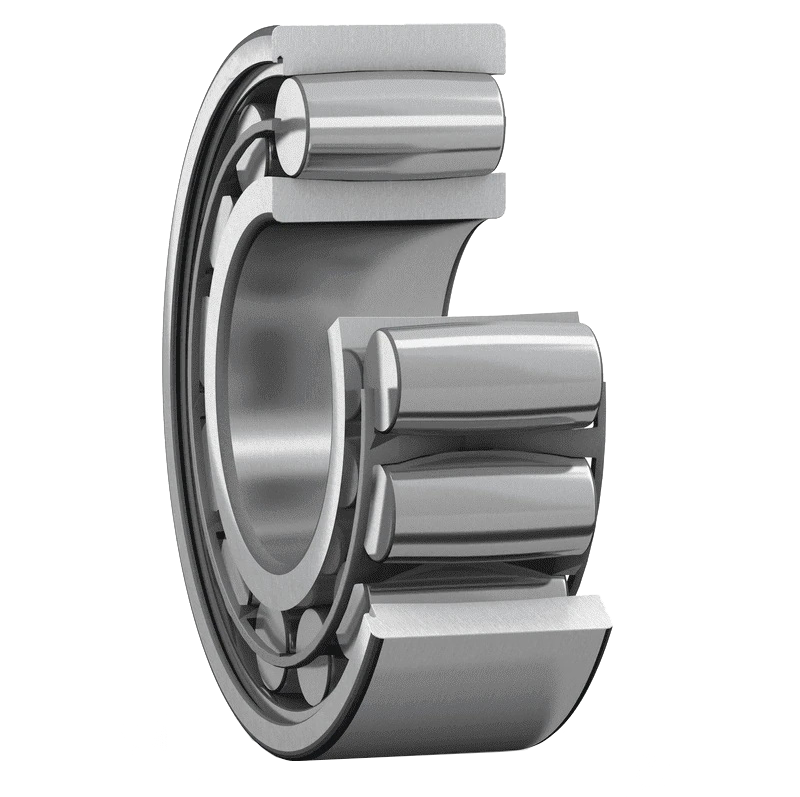
FCDP5682300/YA6: Dimensions, Load & Speed Data Brief
Vibration on a rolling mill stand rarely announces itself as a bearing problem at first. It shows up as gauge drift, chatter marks, uneven roll wear, or a housing that runs warmer after a roll change. By the time a maintenance team identifies a four-row cylindrical roller bearing as the suspect, the line has often lost time to a combination of high radial load, contaminated lubricant, and imperfect seating. The FCDP5682300/YA6 is the kind of bearing that belongs in that conversation: a 280 mm bore, 410 mm outside diameter, 300 mm width four-row cylindrical roller bearing built for cold rolling, hot rolling, and billet mill duties. Its value is not a single headline number. It is the way boundary dimensions, load ratings, cage design, and mounting practice line up for heavy radial service. A bearing that is correctly sized but poorly seated will still generate the same old symptoms.
At a glance
- Specification: Value
- Model: FCDP5682300/YA6
- Category: Four-row cylindrical roller bearings
- Dimensions (d × D × B): 280 × 410 × 300 mm
Boundary dimensions and the mounting envelope
The first check for any mill bearing is whether the housing and shaft can accept it without forcing geometry. FCDP5682300/YA6 uses a 280 mm bore, 410 mm outside diameter, and 300 mm width. Those figures set the envelope, but they also dictate shoulder heights, fillet radii, and the space available for oil feed and seals. A four-row bearing of this size is not a drop-in cartridge; the surrounding structure must be stiff enough to keep the rows sharing load. The 300 mm width is especially important because it spreads the roller paths across a long axial span, so housing bore alignment and shaft seat alignment have a direct effect on row-to-row load distribution.
The 137 kg mass matters during handling and during thermal growth. A cylindrical bore simplifies shaft fit compared with a tapered bore, but it does not remove the need to check roundness, taper, and surface finish on both the shaft and housing. If the housing bore is soft or the shaft seat is out of round, the outer ring can distort and the roller paths will tell the story through heat and vibration. Clean mounting surfaces are part of the specification, not a workshop preference.
| Specification | Value |
|---|---|
| Model | FCDP5682300/YA6 |
| Category | Four-row cylindrical roller bearings |
| Dimensions (d × D × B) | 280 × 410 × 300 mm |
| Bore type | Cylindrical bore |
| Weight | 137 kg |
| Basic dynamic load rating radial (Cr) | 3,730,000 N |
| Basic static load rating radial (Cor) | 8,400,000 N |
| Cage | Machined steel cages – pin type |
| Number of rows | Four |
| Interchange reference | 56FC41300 |
For engineers comparing drawings, the Four-row cylindrical roller bearings category is a useful starting point before narrowing to this 280 × 410 × 300 mm envelope.
Load ratings and duty interpretation
The FCDP5682300/YA6 carries a basic dynamic radial load rating of 3,730,000 N and a basic static radial load rating of 8,400,000 N. In mill language, those are not abstract catalogue values. The static rating is the number to watch during roll changes, strip breaks, cobbles, and other short-duration peaks that can brinell a raceway. The dynamic rating is the basis for fatigue life when the bearing rotates under load and the load spectrum is known.
Four rows are used because a single row of rollers cannot spread a heavy radial load across a wide contact zone without becoming too large in diameter. With four rows, the load is distributed across several roller paths, and the pin-type machined steel cage keeps the rollers spaced under shock and acceleration. That cage style is robust, but it also demands clean lubrication; debris that reaches the pin area can wear the cage pockets and change roller guidance.
Do not compare the FCDP5682300/YA6 with a bearing from a different row count using bore and outside diameter alone. A four-row cylindrical roller bearing with this width and static rating is selected for a specific load path, not simply for the shaft diameter. The dynamic and static ratings should be evaluated together with the actual radial load, axial location method, clearance, and lubrication film. A first-pass life estimate should use the real load spectrum and the intended operating viscosity, not a single peak load from a commissioning sheet. The bearing number reference helps confirm that the designation and interchange reference are being read correctly before a replacement is ordered.
Speed limits, lubrication, and heat management
Speed limits for a bearing like this are application data, not a single rpm figure printed on a drawing. A four-row cylindrical roller bearing in a cold rolling mill, hot rolling mill, or billet mill runs in a system where oil flow, oil viscosity, filtration, cooling, and housing rigidity all affect the usable speed. This bearing should be treated as a heavy-radial-duty component, not a high-speed spindle bearing. Its pin-type cage and wide roller arrangement favor load capacity and stiffness, so speed review should start with the mill schedule and lubrication design.
Short answer: verify speed with FIJ for the actual stand. Longer answer: check the heat balance. At higher speed, churning and roller/cage friction raise temperature; if oil drain is restricted or the housing has poor heat rejection, the bearing can run hotter than the lubricant can tolerate. The resulting viscosity drop reduces film thickness, and the first symptoms may be cage wear, roller end distress, or a slow rise in vibration. Filtration matters as much as viscosity because a pin-type cage has small clearances that do not tolerate metallic debris. For hot mill applications, thermal expansion of the shaft and housing must also be included in clearance selection.
Mounting considerations and replacement checks
Mounting FCDP5682300/YA6 is a clean, controlled operation, not a hammer-and-pry-bar job. The bearing should be handled with lifting equipment that supports the outer ring and cage assembly, and it should be kept square to the shaft during installation. Induction heating may be used when the fit requires it, but the temperature must be controlled and the bearing must be allowed to cool in a way that does not trap it on a shoulder. Before fitting the bearing, check shaft and housing dimensions, shoulder squareness, fillet clearance, and oil holes. After fitting, confirm that the rollers are free to rotate and that the cage is not loaded by a seal or a mispositioned spacer.
Because this is a cylindrical bore bearing, axial location comes from the surrounding components. The housing and shaft shoulders must provide the intended axial guidance without clamping the roller assembly. In a four-row design, uneven clamping or a cocked outer ring can shift load to one or two rows, and the rating advantage disappears. Store the bearing in its original package until the mounting area is clean, and keep covers on oil ports during handling. Replacement checks should include the old bearing’s wear pattern, lubricant condition, and the runout of the seat surfaces. If the old bearing shows a diagonal wear path, look at housing alignment before ordering a new one.
Request a quote for FCDP5682300/YA6 from FIJ Bearing and include your stand, load spectrum, lubrication method, and mounting drawing so the fit and clearance can be reviewed together.