
7214AWP5 angular contact ball bearing 70×125mm
News & Updates
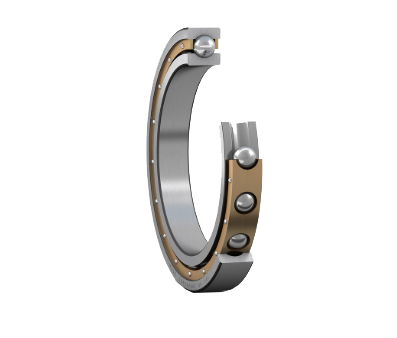
7214AWP5 angular contact ball bearing 70×125mm
A 7214AWP5 is not a universal drop-in for every 70×125×24 angular contact bearing. It is a 72-series, single-row, P5-precision unit with a one-piece pressed steel cage, so its cross-reference value depends less on the headline dimensions than on contact angle, cage style, tolerance class, and load case. Buyers comparing catalogues usually find several dimensional equivalents; far fewer are true functional equivalents.
At a glance
- Parameter: Value
- Model number: 7214AWP5
- Series: 72 series (72..AWP5)
- Bore diameter (d): 70 mm
Where This P5 Bearing Sits Against Common 70×125×24 Alternatives
The common alternative is a general-purpose 7214 angular contact bearing with the same 70 mm bore, 125 mm outside diameter, and 24 mm width but a lower tolerance class or a machined cage. On paper the envelope is identical, so it appears in interchange filters. In service, the 7214AWP5 brings P5 running accuracy and a pressed steel cage that suits medium-speed, moderate-preload arrangements where low friction and repeatable location matter. A bearing with a different contact angle or preload may bolt into the same housing but change axial stiffness, heat generation, and bearing life.
Within our Single row angular contact ball bearings category, this model is positioned for applications that need more controlled geometry than a commodity 72-series bearing yet do not require a ceramic or high-speed polymer cage. That distinction is important in interchange programs: dimensional equivalence gets you to the shortlist; suffix equivalence gets you to the approved part.
The Specs That Drive Interchange Decisions
Interchange databases rarely stop at d, D, and B. The values below are the ones engineers should pull into a comparison sheet before accepting an equivalent model.
| Parameter | Value |
|---|---|
| Model number | 7214AWP5 |
| Series | 72 series (72..AWP5) |
| Bore diameter (d) | 70 mm |
| Outside diameter (D) | 125 mm |
| Width (B) | 24 mm |
| Basic dynamic radial load rating (Cr) | 83443 N |
| Basic static radial load rating (Cor) | 62910 N |
| Weight | 1.11 kg |
| Cage | W = Pressed Steel Cage, One-Piece |
| Reference speed / limiting speed | 4479 r/min / 6145 r/min |
Load ratings and speed limits are not just catalogue numbers. The 83443 N dynamic rating and 62910 N static rating show how the bearing is expected to carry combined radial and axial duty, while the 4479 r/min reference speed and 6145 r/min limiting speed frame the thermal and lubrication envelope. A cross-reference that matches dimensions but not these ratings deserves a design check, not an automatic approval.
Reading the AWP5 Suffix Before You Cross-Reference
Suffix order is where many interchange exercises go wrong. In 7214AWP5, the 72 series identifies the angular contact family and the 14 gives the bore/size code; the AWP5 portion carries the contact-angle, cage, and precision intent. A different catalogue may reorder those letters or use a numeric precision code, so a string match is unreliable. Use the bearing number reference to map suffix logic before you compare drawings.
At minimum, confirm the following on both the existing bearing and the proposed equivalent:
- Boundary dimensions: 70 mm bore, 125 mm outside diameter, 24 mm width.
- Contact angle and mounting arrangement, including face-to-face or back-to-back pairing.
- Cage type: one-piece pressed steel versus machined or polymer alternatives.
- Tolerance class: P5 accuracy affects runout, fit, and preload consistency.
- Radial load rating, axial capacity, and speed margin under the actual lubrication plan.
Do not treat a suffix difference as cosmetic. A pressed steel cage can be an advantage in cost-sensitive medium-speed builds, but it is not automatically a substitute for a machined cage in high shock or high-temperature duty.
What Interchange Programs Check—and Where This Bearing Wins or Loses
Interchange programs usually start with a dimensional match, then flag differences in cage, precision, internal clearance, and contact angle. For 7214AWP5, the first pass is easy because 70×125×24 is a well-populated size. The second pass is more selective. A competing 7214 with a 15° contact angle may offer higher speed potential but less axial stiffness; a 25° or 30° variant may carry axial load better but generate different heat. The AWP5 designation should be verified against the drawing rather than assumed from a catalogue table.
In an interchange program, this bearing tends to score well when the requirement is a P5 angular contact bearing with a pressed steel cage, moderate preload, and a speed ceiling below the limiting value. It scores poorly when the application depends on a specific preload set at the factory, a non-standard contact angle, or a cage material that is not interchangeable. That is why two bearings can share the same 70×125×24 envelope and still fail a substitution review.
Practical Substitution Notes for Buyers and Engineers
For maintenance purchases, the safest cross-reference path is to supply the complete 7214AWP5 marking, the mounting arrangement, and the measured preload or axial clearance. For OEM projects, include the load spectrum and lubrication method so the supplier can check speed margin and life, not just dimensions.
Keep the approval boundary clear: dimensionally interchangeable, mechanically equivalent, and functionally approved are three different statuses. A 7214AWP5 may be dimensionally interchangeable with several 72-series bearings but mechanically equivalent only when contact angle, cage, precision, and internal fit match. The final sign-off should rest on drawing comparison and application data.
For a documented interchange review, contact FIJ Bearing with your existing bearing marking, load case, and target service life.
Request a quote from FIJ for 7214AWP5 or a proposed equivalent.