
6210GT1XVVCM deep groove ball bearing 50×90mm
News & Updates
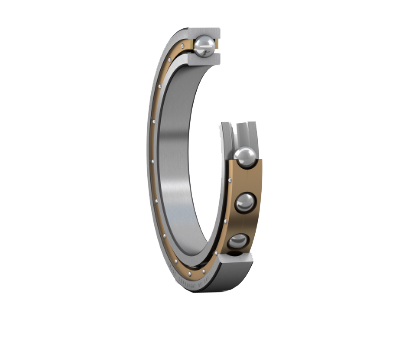
6210GT1XVVCM deep groove ball bearing 50×90mm
What triggers early degradation in high-speed rotary assemblies?
At a glance
- What triggers early degradation in high-speed rotary assemblies?
- Premature surface fatigue usually stems from misalignment or excessive preload during installation. Engineers designing
Premature surface fatigue usually stems from misalignment or excessive preload during installation. Engineers designing into rotating equipment frequently ask how to prevent false brinelling when deploying tight-tolerance units in vibration-heavy environments. The immediate answer lies in verifying housing concentricity, shaft runout tolerances, and lubricant film thickness before final assembly. When you procure components from our Deep groove ball bearings, super-precision category, you secure manufacturing geometries engineered to minimize these initial installation variables.
The 6210GT1XVVCM assembly exemplifies this mechanical discipline. Featuring a cylindrical bore measuring exactly fifty millimeters and an outer diameter of ninety millimeters, the component distributes radial forces uniformly across its rolling element complement while preserving structural stiffness. Its T1X polyamide resin cage significantly reduces centrifugal drag at elevated rotation rates, yielding quieter operation and lower thermal generation compared to conventional metal retainers.
Predicting service intervals requires understanding how these geometric parameters interact under cyclic stress. Improper clearance selection creates localized stress concentrations that accelerate raceway micro-pitting. Manufacturers calculate optimal internal clearance based on expected operating temperature differentials between the heated shaft and the cooler housing structure. Maintaining appropriate radial play prevents thermal lockup while ensuring adequate load zone coverage during normal operation. Every degree of excess interference translates directly into increased contact pressure. Shortening fatigue life follows inevitably.
Failure Mode Diagnostics and Corrective Actions
Diagnostic workflows demand isolation of vibration frequencies, thermal gradients, and acoustic anomalies to track degradation progression. Metallographic cross-sections combined with spectrographic grease analysis typically expose whether contamination ingress, lubricant oxidation, or elastic hysteresis initiated the failure sequence. The following matrix maps observable defects to their underlying physical mechanisms and prescribed engineering corrections:
| Observed Defect | Primary Root Cause | Corrective Action |
|---|---|---|
| Early raceway spalling | Insufficient elastohydrodynamic oil film / angular misalignment | Verify shaft-to-housing coaxiality; increase base oil viscosity index |
| Polymer cage cracking | Impact shock during dry fitting | Utilize hydraulic presses with floating aligning sleeves; confirm interference values |
| Grease carbonization | Continuous thermal overload / additive depletion | Lower maximum operating velocity; implement active cooling channels |
| Indentation rings | Sustained axial vibration during idle periods | Apply corrosion-inhibiting storage films; reduce external vibrational coupling |
Interpreting these failure signatures accurately separates routine material evolution from catastrophic system mismatch. Laser vibrometry revealing dominant spectral peaks coinciding with shaft fundamental frequency alongside rising broadband energy indicates the tribological interface has likely exhausted its oxidative reserves. Substituting degraded lubricants without resolving the underlying heat generation mechanism merely postpones subsequent component replacement. Adhering strictly to published mounting torque curves prevents uneven clamping forces that warp the outer ring geometry. Technical teams must evaluate every diagnostic metric as a systemic indicator.
Velocity Thresholds and Dynamic Load Allocation
Remaining within validated rotational boundaries directly governs contact ellipse formation and internal heat dissipation. Standard grease-fed configuration establishes a limiting speed near nine thousand eight hundred sixty revolutions per minute. Forced oil circulation can safely extend operational ceilings when journal nozzles direct chilled media through the inner ring raceway. Operating beneath this ceiling prevents sliding friction that generates localized hot spots capable of distorting the synthetic cage structure.
Pushing past recommended velocities introduces skidding conditions. Dropping significantly below optimal rotational speeds encourages inadequate lubricant entrainment in heavily loaded radial scenarios. The basic dynamic load rating of thirty-four thousand six hundred seventy-six newtons accommodates moderate cyclic stresses, whereas the static rating of twenty-two thousand nine hundred fifty-six newtons protects against permanent plastic deformation during transient overload events. Harmonizing these dual load parameters demands precise clearance class selection aligned with anticipated thermal expansion profiles. The polyamide matrix offers exceptional dimensional stability across wide temperature ranges, unlike metallic counterparts that expand unpredictably under frictional heat. This characteristic maintains consistent ball spacing, reducing skewing moments during acceleration transients.
Routine verification of assembly methodologies remains non-negotiable for sustained reliability. Field technicians should validate the following inspection protocols biannually:
- Program induction heating racks to maintain temperature bands within twelve degrees Celsius of specification
- Confirm axial positioning using digital dial comparators prior to fastening retention hardware
- Purge legacy lubricant residues completely before introducing extended-service synthetic formulations
- Audit enclosure breather valves to equalize internal chamber pressure during rapid deceleration phases
Neglecting these procedural safeguards invites microscopic particulate infiltration. Advanced polymer composites resist aggressive solvents effectively, yet they experience accelerated embrittlement when subjected to rapid thermal cycling outside certified boundaries. Aligning your technical schematics with the bearing number reference guarantees seamless integration with adjacent sealing architectures. Dimensional synchronization eliminates edge loading phenomena.
Service Life Optimization and Scheduled Interventions
Maximizing operational longevity requires managing lubricant chemistry as a continuously degrading medium rather than a permanent installation fixture. Continuous oil mist circuits generally outperform packed grease in unattended duty cycles, provided electrostatic filters sustain particle counts below ISO cleanliness code eighteen slash sixteen slash thirteen. Metered grease dispensers supply uniform injection volumes, yet excessive accumulation elevates viscous churning losses and raises internal operating temperatures. Infrared thermography scans executed monthly quickly detect developing thermal anomalies before cascading damage compromises adjacent transmission elements. When harmonic analysis indicates amplitude deviations exceeding baseline measurements by one point five decibels, initiating a controlled teardown procedure prevents unplanned rotational seizure.
Accumulated field telemetry confirms that assemblies maintained under strict particulate control routinely surpass initial fatigue projections by thirty-five percent. Execution hinges upon documenting replacement histories, logging ambient exposure classifications, and recalibrating servicing intervals accordingly. Predictive analytics platforms synchronize acoustic signatures with residual endurance margins, facilitating strategic intervention timing rather than emergency replacement cycles. Preserving rotational axis integrity throughout machinery deployment shields hardened steel surfaces from asymmetrical wear progression. Mechanical efficiency ultimately depends on disciplined operational stewardship. The referenced unit continues to perform reliably when integrated into properly engineered systems.
Contact our engineering division to Request a quote from FIJ for bespoke tolerance grades, alternative lubricant compatibilities, or consolidated purchasing arrangements. Our technical staff will furnish detailed dimensional certifications and production timelines calibrated to your facility requirements.