
4309O deep groove ball bearing 45×100mm
News & Updates
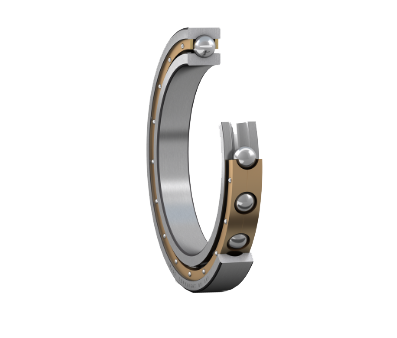
4309O deep groove ball bearing 45×100mm
A 36 mm width on a 45 mm bore is the first clue that the 4309O is not a generic 45 mm ball bearing. The extra width spaces two ball rows across a 100 mm outside diameter, raising radial and axial stiffness while keeping the envelope compact. That matters because the same design feature that improves load sharing also makes lubrication distribution, alignment and mounting discipline more critical: when one row works harder, distress often begins long before a noisy bearing reaches the maintenance desk.
At a glance
- Model: 4309O
- Type: Double row deep groove ball bearings
- Bore diameter (d): 45 mm
- Outside diameter (D): 100 mm
What the 45×100×36 envelope tells maintenance teams
The 4309O is a double row deep groove ball bearing with a 45 mm bore, 100 mm outside diameter and 36 mm width. Its 1.21 kg mass and two-row internal geometry suit applications where a single-row bearing might need a wider housing or additional axial location. As part of our Double row deep groove ball bearings category, this size is used in pumps, blowers, gear reducers and similar medium-duty equipment—provided the failure modes below are designed out early.
| Model | 4309O |
|---|---|
| Type | Double row deep groove ball bearings |
| Bore diameter (d) | 45 mm |
| Outside diameter (D) | 100 mm |
| Width (B) | 36 mm |
| Boundary dimensions | 45 × 100 × 36 mm |
| Weight | 1.21 kg |
Use the dimensions as a troubleshooting baseline: a 45 mm shaft fit that is too loose can creep; a 100 mm housing bore that is out of round can pinch one row; 36 mm width leaves little room for debris to escape once sealing is compromised.
Failure mode 1: raceway spalling and fatigue flaking
Spalling usually appears as dull, flaky patches on one or both raceways, often with a circumferential band matching ball pitch. In a double row bearing, it can start in the row carrying the heavier axial or radial share. Root causes are overload beyond the application’s calculated life, poor shaft or housing fit that changes effective clearance, contamination ingress, and lubricant starvation. Loose fits are especially deceptive: the ring can creep, generate heat and release fine wear debris that contaminates the grease and accelerates flaking.
Avoidance starts with the load case, not the grease. Verify equivalent dynamic and static loads, confirm the fit targets, and keep the housing and lubricant clean during assembly.
Failure mode 2: brinelling and false brinelling
True brinelling is plastic indentation from impact or static overload; false brinelling is wear at ball-race contacts from small oscillating movements while the shaft is stationary. The latter is common in standby pumps, fans and conveyors that vibrate without rotating. Because the double row layout shares load across two ball rows, a single dented spot can alter the load split and accelerate cage stress. Storage and handling matter: do not drop the bearing, keep it in its original package, and lock out vibration during long idle periods where possible.
Where micro-motion cannot be eliminated, use a grease with suitable boundary lubrication and review the mounting preload or float.
Failure mode 3: lubrication breakdown and overheating
Overheating leaves varnish, discolored grease and hardened residue; eventually the cage pockets wear and ball skidding follows. Root causes include the wrong grease base-oil viscosity, overfilling, underfilling, incompatible grease mixing, and excessive speed for the seal or internal clearance. The 4309O’s 36 mm width gives heat more internal path to travel, so a temperature rise that looks modest at the housing can be significant near the second row. Confirm the grease’s speed rating and fill volume, and investigate any step change in running temperature before adding more lubricant.
Temperature trending is more useful than a single spot reading.
Failure mode 4: misalignment, cage wear and mounting damage
Misalignment shows as skewed ball tracks, uneven cage wear, or a wear band on one side of the raceway. It can come from shaft deflection, housing bore misalignment, out-of-square shoulder faces, or pressing the bearing by its outer ring instead of the fitted ring. Installation bruises and brinelling from mounting force are often misread as material defects. Use controlled press tools, check shaft and housing geometry before assembly, and rotate the shaft by hand after mounting to detect binding. If a bearing must be removed, do not reuse it after an uncontrolled pull: the cage and raceways may look intact while the fit has already been compromised.
Inspection and root-cause workflow
When a 4309O is returned from service, photograph it before cleaning; note grease condition, seal damage, and the position of wear relative to the load zone. Cross-check the suffix and dimensions in the bearing number reference before assuming the replacement is identical. Then separate the evidence: raceway damage suggests load or lubrication; dents suggest handling or static overload; cage wear suggests speed, misalignment or lubrication; seal damage suggests environment or installation. A practical sequence is: record operating hours and temperature; inspect grease; map wear positions; check shaft and housing fits; verify alignment and load estimate; only then select a corrective action.
Replacing the bearing without correcting the root cause is a scheduled repeat failure.
Avoiding repeat failures: specification and installation checks
Most repeat failures are not random. They trace back to a fit, load, lubrication or contamination assumption that was never verified. Before approving a replacement, confirm the equivalent load and expected life, define shaft and housing tolerances, specify grease and re-lubrication interval, protect the sealing path, and record a baseline vibration and temperature reading after commissioning. For medium-duty equipment, a short thermal run-in check often reveals misalignment or over-greasing before it becomes a warranty issue.
Document the assembly force and final clearance where accessible; these two records resolve many arguments later.
Request a quote from FIJ Bearing and share your load case, speed and environmental conditions so our engineers can confirm the right fit and lubrication for this double row deep groove ball bearing.