
CSEF065-PL6-TP-AH01 angular contact ball 165.1×203.2mm
News & Updates
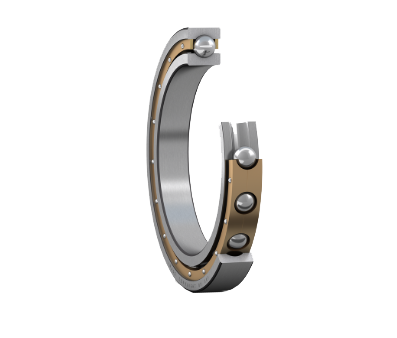
CSEF065-PL6-TP-AH01 angular contact ball 165.1×203.2mm
Vibration Starts With the Wrong Section Height
Vibration in compact rotating assemblies often traces back to a bearing that is too thick, too flexible, or poorly matched to axial loads. When the housing has limited radial space, designers squeeze in a standard ball bearing and then fight deflection, noise, and uneven preload for the life of the machine. A thin section angular contact design gives the assembly more room to manage contact angle, stiffness, and thermal growth without opening the envelope.
At a glance
- Parameter: Value
- Model: CSEF065-PL6-TP-AH01
- Type: Thin section angular contact ball bearing
- Bore (d): 165.1 mm
The CSEF065-PL6-TP-AH01 is aimed at that gap: a 165.1×203.2×19.05 mm thin section angular contact ball bearing for applications where axial location and low section height matter together.
What This Bearing Provides
As part of our Thin section angular contact ball bearings category, this bearing uses a narrow ring section to save radial and axial space while still carrying combined loads. The 1.32 kg mass is useful in moving axes, and the 19.05 mm width keeps stack height under control. Because angular contact geometry reacts axial load along a defined contact line, mounting direction and preload matter more than they do with a deep groove bearing.
| Parameter | Value |
|---|---|
| Model | CSEF065-PL6-TP-AH01 |
| Type | Thin section angular contact ball bearing |
| Bore (d) | 165.1 mm |
| Outside diameter (D) | 203.2 mm |
| Width (B) | 19.05 mm |
| Mass | 1.32 kg |
The table is a starting point, not a substitute for mounting and preload review.
Applications That Fit
For teams comparing the CSEF065-PL6-TP-AH01 against a standard section bearing, the best fits share three traits: limited axial stack height, a need for controlled axial stiffness, and a mounting design that can set preload correctly. Typical uses include:
- Precision rotary tables and indexing heads that need axial stiffness in a narrow envelope.
- Robotics wrist and elbow joints where weight and section height matter.
- Medical imaging or laboratory equipment requiring smooth, low-vibration rotation.
- Aerospace actuators and ground support fixtures with strict mass targets.
- Semiconductor handling and metrology stages where thermal growth and contamination control are critical.
These are not drop-in replacements for a deep groove bearing. The surrounding shaft and housing should be evaluated for contact angle, load direction, and lubrication path.
Operating Conditions to Respect
Thin section angular contact bearings tolerate speed and temperature well when the lubricant and preload are matched to the duty cycle. They are less forgiving of misalignment, contaminated grease, and uncontrolled axial clearance. Keep housing shoulders square, verify shaft and housing fit, and establish a clean assembly area. For high-speed operation, check the speed rating from the manufacturer and validate lubricant viscosity at actual running temperature.
Axial load should be reviewed together with radial load; a bearing that is correct in static catalog terms can still run hot if preload is too high or the lubricant film collapses during a low-speed start-stop cycle. Consider thermal growth of the shaft and housing, especially when the adjacent structure uses aluminum while the bearing rings are steel.
Checks Before Ordering
Before you place a PO for the CSEF065-PL6-TP-AH01, confirm the mounting orientation, required preload or clearance, lubrication method, and expected axial/radial load ratio. Use the bearing number reference to decode any suffix or variant on the drawing, and compare it with the original European design before accepting an alternate. Also verify chamfer and shoulder dimensions because a thin ring leaves little room for fillet interference.
Ask for a dimensional inspection report and, where the application is sensitive, a runout and preload verification plan. If the bearing will be pressed into a housing, confirm the allowable mounting force and whether the rings can be heated safely. These checks reduce the risk of brinelling or setting the wrong contact angle during assembly.
Quote and Ordering Notes
Prepare the drawing revision, quantity, preload target, and lubrication requirement before requesting pricing. Review the mounting details with FIJ Bearing so the inspection and packaging plan matches the application. For prototype builds, state the assembly sequence; for production orders, include expected annual volume and any cleanroom or traceability requirements.
Request a quote for CSEF065-PL6-TP-AH01 from FIJ.