
SL04220-PP-2NR-REP cylindrical roller bearing 220×300mm
News & Updates
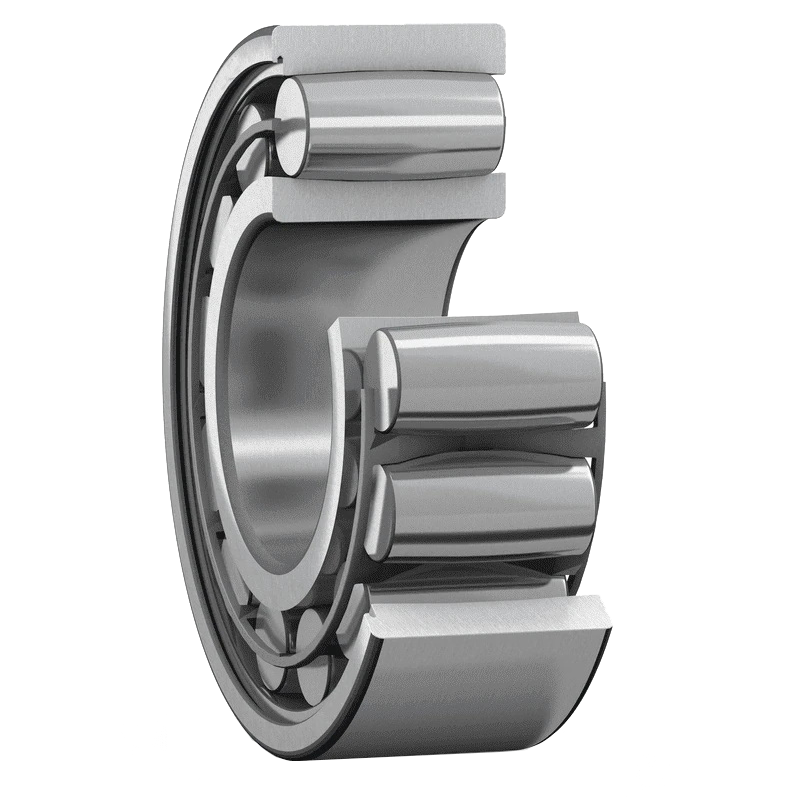
SL04220-PP-2NR-REP cylindrical roller bearing 220×300mm
A continuous-casting runout table is not a clean showroom. Heat, scale, water, and radial shock load reach the bearing position on a 220 mm journal, and when a bearing is due for replacement the planner usually starts with a part number, not a drawing. That is how the question appears: SL04220-PP-2NR-REP equivalent, available, and interchangeable without turning a planned outage into a fitting exercise. The bearing is a double row cylindrical roller design, 220×300×95 mm, 19.5 kg, and the answer depends as much on execution details as on the three main dimensions.
At a glance
- A continuous-casting runout table is not a clean showroom. Heat, scale, water, and radial shock load reach the bearing p
- The SL04220-PP-2NR-REP sits in the heavy-duty end of the 220 mm bore range. Its 95 mm width and double-row roller comple
What the SL04220-PP-2NR-REP tells an interchange engineer
The SL04220-PP-2NR-REP sits in the heavy-duty end of the 220 mm bore range. Its 95 mm width and double-row roller complement suit radial loads in gearboxes, mill stands, conveyor pulleys, and other industrial positions where shaft deflection and load direction are controlled but radial capacity matters. The basic envelope is simple to read: 220 mm bore, 300 mm outside diameter, 95 mm width. The 19.5 kg mass is a useful handling indicator; it is heavy enough that fitting methods, lifting points, and housing access should be planned before the bearing arrives.
On an interchange desk, however, the model suffix carries equal weight. PP, 2NR, and REP are not marketing additions. They encode execution details such as protection, groove or ring features, and revision-level configuration. A supplier can match 220×300×95 and still miss the application if the seal arrangement, lubrication path, or locating feature is different. That is why any cross-reference to this bearing should be treated as a starting point and checked line by line against the controlled drawing.
| Parameter | Value | Interchange check |
|---|---|---|
| Model | SL04220-PP-2NR-REP | Confirm suffix execution against drawing |
| Bore d | 220 mm | Check shaft fit, shoulder, and fillet |
| Outside diameter D | 300 mm | Check housing fit and locating arrangement |
| Width B | 95 mm | Verify axial space and side clearances |
| Mass | 19.5 kg | Plan lifting, fitting, and storage |
| Type | Double row cylindrical roller bearing | Compare roller complement and load ratings |
The cross-reference logic: dimensions first, then execution details
Cross-reference work usually starts with the simplest facts because they eliminate the most candidates. In this case, 220×300×95 mm quickly narrows a catalogue search to a small family of double row cylindrical roller bearings. The next filter is not another number; it is application function. A bearing used as a locating bearing can have different shoulder and groove requirements from one that floats axially. A sealed position can demand a different protection level from an oil-lubricated gearbox bearing.
At this stage, a bearing number reference is useful because it helps decode families and suffix conventions, but it cannot certify a substitute. The original European design may appear under several supplier codes, and some databases map only the envelope. A proper comparison should cover:
- Boundary dimensions, chamfer limits, and shaft or housing fillet clearance.
- Dynamic and static load ratings, roller profile, and roller complement.
- Cage design, internal clearance, and permissible operating temperature.
- Seal or shield arrangement, grease path, and relubrication features.
- Snap-ring grooves, locating shoulders, and axial displacement behaviour.
- Mounting fit, shaft and housing tolerances, and required fitting tools.
After that list, the engineer should compare ratings, speed limits, and permissible misalignment in the actual load case. If a candidate is stronger in one rating but has a narrower lubrication groove or a different snap-ring position, the application may reject it even though the catalogue says equivalent.
How interchange programs rank a candidate
Most interchange programs work in tiers. The first tier is dimensional: bore, outside diameter, width, chamfer, and mass close enough to fit the same space. The second tier is functional: roller complement, cage design, clearance, sealing, and lubrication features. The third tier is application validation: load spectrum, speed, temperature, contamination, mounting practice, and maintenance interval. A database can answer the first tier quickly; it rarely answers the third.
For the SL04220-PP-2NR-REP, this means a cross-reference entry should be read as a candidate list, not an approval. If a distributor lists a substitute, ask which tier has been checked. Was the comparison made from the manufacturer drawing, or only from a catalogue dimension table? Were seals, grooves, and clearance confirmed? On a 19.5 kg bearing in a planned outage, a small execution difference can cost more than the price gap between two quotes.
Interchange programs become more reliable when the user supplies more than the part number. A marked drawing, a photo of the housing, the lubricant, the operating temperature, and the failure mode all improve the match. If the old bearing ran hot, wore on one side, or showed contamination, the replacement discussion should include those observations. A cross-reference that ignores failure evidence is only a dimensional lookup.
Where 220×300×95 interchange goes wrong
Failures in interchange work often come from four areas, and none of them are exotic. The first is axial location. A double row cylindrical roller bearing may be required to locate the shaft, float in the housing, or allow controlled axial displacement. If the replacement changes the shoulder or ring feature, the shaft position can change under load. The second is sealing and lubrication. A protected variant can look identical on the outside while using a different seal lip, grease path, or relubrication opening.
The third is internal clearance and fit. A candidate with the same envelope but a different clearance class may run warmer or lose preload control. The fourth is load rating and roller geometry. Two bearings can share 220×300×95 dimensions while using different roller lengths, profiles, or cage materials. For a double row cylindrical roller bearing in a continuous-duty position, those differences affect fatigue life and heat generation. Buyers should also verify that the candidate is listed in the Double row cylindrical roller bearings category with the intended execution, not just the same bore and outside diameter.
At 220 mm bore, fitting discipline matters. A 19.5 kg bearing should be lifted and seated with tools that keep it square to the shaft and housing. Interchange approval should include mounting instructions and a check that the replacement uses the same lubrication method. Otherwise, a technically similar bearing can fail early because the installation procedure was written for a different variant.
A practical verification path before approval
Start with the drawing and the application, not the catalogue. Confirm 220×300×95 mm, then verify the suffix features, clearance, cage, seals, and lubrication. Ask the supplier for a comparison table that shows both the reference and the candidate, including ratings and features. If the bearing is for a critical position, request a review of the load and speed data before the purchase order is released. For scheduled maintenance, keep the approved cross-reference on file with the machine history so the next planner does not start from zero.
FIJ Bearing supplies double row cylindrical roller bearings and works with maintenance teams on interchange checks rather than simple part-number swaps. The useful question is not only whether a bearing fits the space, but whether it preserves the function of the position. For the 220×300×95 mm size, a controlled cross-reference process keeps the decision technical and auditable. To compare SL04220-PP-2NR-REP alternatives for your application, request a quote from FIJ.