
5203DDU angular contact ball bearing 17×40mm
News & Updates
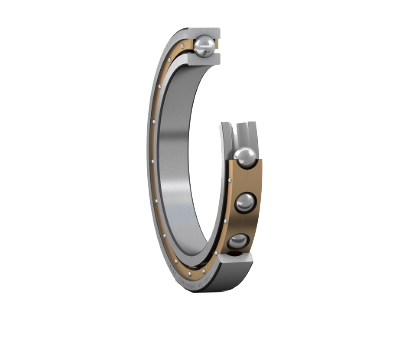
5203DDU angular contact ball bearing 17×40mm
What is the 5203DDU bearing? The 5203DDU is a sealed double row angular contact ball bearing with a 17 mm bore, a 40 mm outside diameter and a 17.5 mm width. It belongs to the 5200 series and uses a low-carbon steel cage, a cylindrical bore and two rows of balls arranged to carry combined radial and axial loads. For buyers comparing a compact sealed bearing, the useful engineering values are the boundary dimensions, the radial load ratings and the reference speed — not just the catalogue number.
At a glance
- Specification: Value
- Model number: 5203DDU
- Series: 5200 series (52..DDU)
- Bearing type: Sealed Type Double Row Angular Contact Ball Bearings
Boundary dimensions and the 5203DDU envelope
The 17 mm bore, 40 mm outside diameter and 17.5 mm width define the mounting envelope before any performance claim matters. A double row angular contact bearing is wider than a comparable single row deep groove bearing, so the 17.5 mm width must be checked against the housing shoulder, shaft shoulder and axial clearance to adjacent components. If the adjacent part was designed around a 17 mm wide bearing, the extra 0.5 mm can matter in a clamped stack.
The boundary dimensions also set the minimum housing wall and the practical shaft shoulder diameter. A 40 mm outside diameter does not leave much radial room for a deep housing shoulder, and the seal outside diameter must clear the housing chamfer during insertion. Use the table below as the controlled dimensional and rating reference for this model. The values are the ones to quote in a drawing review, not rounded catalogue approximations.
| Specification | Value |
|---|---|
| Model number | 5203DDU |
| Series | 5200 series (52..DDU) |
| Bearing type | Sealed Type Double Row Angular Contact Ball Bearings |
| Bore | Cylindrical |
| Inside diameter (d) | 17 mm |
| Outside diameter (D) | 40 mm |
| Thickness width (B) | 17.5 mm |
| Basic dynamic load rating radial (Cr) | 11912 N |
| Basic static load rating radial (Cor) | 8163 N |
| Reference speed | 9850 r/min |
The shoulder heights and fillet radii are just as important as the headline numbers. A 40 mm outside diameter leaves limited radial space for the housing shoulder, and the seal must not be used as an axial stop. Check that the shaft shoulder contacts the inner ring face, not the cage or seal, and that the housing shoulder contacts the outer ring without rubbing the seal lip. For related sizes and seal variants, compare the Double row angular contact ball bearings category before changing the envelope.
Load ratings: what Cr 11912 N and Cor 8163 N mean in practice
The basic dynamic radial load rating is 11912 N and the basic static radial load rating is 8163 N. The dynamic rating is the starting point for fatigue life calculations under rotating load; the static rating is the limit for heavy static or shock loading without permanent raceway deformation. Because this is a double row angular contact design, the bearing can support radial loads and axial loads in both directions, but the data above gives radial ratings only. Do not estimate axial capacity from these two numbers alone.
For a first pass, compare the applied radial load with Cr and Cor, then apply the bearing-specific equivalent load equation if axial load is present. A 5203DDU may look lightly loaded against a 11912 N dynamic rating, but life is also affected by fit, lubrication, contamination and misalignment. The low-carbon steel cage is a standard pressed cage design; it is suitable for normal running conditions, but it should not be treated as a locating feature during assembly or as a load path. If the application has repeated shock, recheck the static safety factor and the housing rigidity rather than relying on the catalogue rating alone.
Two practical checks are worth adding to the load review. First, confirm whether the axial load is continuous or only a locating thrust; the equivalent load calculation can change the required life estimate significantly. Second, compare the calculated life at the actual operating speed and grease temperature, not at catalogue reference conditions. If the radial load is close to the static rating during assembly or transport, the bearing may be damaged before it ever runs.
Speed limits, lubrication, and heat at 9850 r/min
The reference speed is 9850 r/min. Treat it as a reference condition, not a guaranteed maximum for every grease, preload or mounting arrangement. Sealed DDU bearings run with the grease fill installed at assembly; at high speed the seal lip friction and grease churning become heat sources. If the application runs close to 9850 r/min, verify the grease base oil viscosity, fill quantity, cage strength and housing heat rejection.
Speed is also a mounting issue. At a 17 mm bore, the shaft is small enough that poor bearing seat roundness or a tilted shoulder can distort the inner ring and raise temperature quickly. Check shaft and housing fits against the load and speed, and confirm that the seal runs on a clean, burr-free surface. If the bearing will start and stop frequently, the grease’s starting torque and the seal design may matter more than the headline speed number. In those cases, ask for the controlled grease specification rather than assuming the standard fill is correct.
Because the bearing is sealed, relubrication is usually not part of the maintenance plan. That makes the initial grease fill and the operating temperature even more important. A sealed bearing that runs hot near its reference speed may have a shorter grease life than a slower application with the same catalogue rating, so the speed review should include duty cycle and ambient conditions.
Sealing, cage, and mounting considerations for 5203DDU
The DDU suffix in the 5203DDU denotes the sealed variant, and that changes the mounting procedure. Seals are not load-bearing surfaces; never press on the seal or transmit mounting force through the balls. Press the inner ring for a shaft fit and the outer ring for a housing fit. Support the ring that is being fitted, and keep the mounting force axial and square to the bearing face.
The low-carbon steel cage and double row geometry also affect handling. Keep the bearing square during insertion, do not allow the outer ring to drop against the balls, and check that the housing bore chamfer clears the seal outside diameter. Double row angular contact bearings have limited misalignment capability compared with self-aligning bearings, so shaft and housing alignment should be checked before the bearing is clamped. If a press fit is used on both rings, control the interference; excessive interference can reduce internal clearance and increase running temperature.
A clean mounting sequence matters here. Fit the bearing to the shaft first if the shaft interference is the tighter fit, then install the assembly into the housing with a proper driver against the outer ring. Avoid hammer blows and avoid applying force through the rolling elements. After mounting, rotate the shaft by hand and listen for seal rub or cage contact before running under load.
Selection checks and procurement notes
Before releasing a purchase order, confirm more than the model number. The 5203DDU data set includes boundary dimensions and radial ratings, but it does not define radial internal clearance, precision class, grease type, seal material or axial load rating. Those details affect noise, starting torque and life. Use the bearing number reference to decode the suffix and compare catalogue variants; then ask for the controlled drawing for the exact part number.
For procurement, state the shaft and housing fits, rotating ring, expected radial and axial loads, speed, duty cycle and ambient temperature. If the bearing is being used as a replacement, send the old bearing markings and a photo of the mounting area so the seal type and cage style can be checked. A matching boundary dimension is not enough if the original part used a different clearance or grease fill.
Request a quote: Send your shaft and housing drawing, load case and speed requirement to FIJ Bearing for a quotation and mounting review.