
TL230/950CAMKE4 Spherical roller Bearing 950×1360mm Review
News & Updates
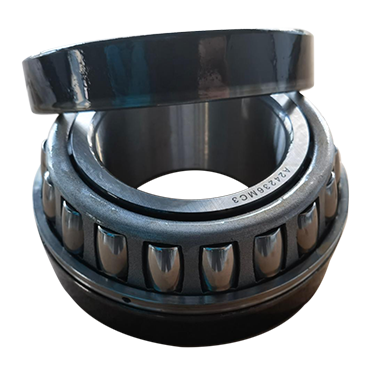
TL230/950CAMKE4 Spherical roller Bearing 950×1360mm Review
TL230/950CAMKE4 — 950 × 1360 × 300 mm, 1,400 kg, spherical roller bearing.
At a glance
- Specification: Value
- Number: TL230/950CAMKE4
- Dimensions (d × D × B): 950 × 1360 × 300 mm
- Weight: 1400.0 kg
Those four figures are the first filter for any buyer: a 950 mm bore, 1360 mm outside diameter, 300 mm width and 1,400 kg unit mass. At this size, the bearing defines the shaft and housing geometry before it defines a catalogue line. The 950 mm bore means the shaft journal must be machined and measured to a tolerance band that suits a tapered-bore mounting; the 1360 mm outside diameter sets the housing bore and the clearance needed for a spherical outer ring; the 300 mm width distributes load across a long contact zone and dictates shoulder spacing. The mass is not a footnote — it changes lifting plans, induction-heating time and the risk of a skewed fit during installation.
A spherical roller bearing in this envelope is chosen for radial capacity plus misalignment tolerance, not for high-speed operation. The TL230/950CAMKE4 sits in the TL230 series, a double-row spherical roller design with a long-life performance claim, a machined brass cage and a tapered bore. This review walks through the specifications as a buyer would use them: first as fit and envelope, then as load and speed limits, then as mounting and procurement checks.
Fit, envelope and the 1,400 kg handling problem
The three boundary dimensions are not interchangeable with any nearby size. A 950 mm bore with a 1360 mm outside diameter leaves a radial section of 205 mm from bore to outside surface, so the housing wall and shaft shoulder must be planned around a substantial bearing block. The 300 mm width is equally practical: it sets the distance between locating shoulders and affects how the load spreads across the two rows of rollers.
For mounting, the tapered bore is the detail that most often decides whether the bearing reaches its expected life. A 1:12 taper allows the inner ring to be driven up a sleeve or shaft seat to set internal clearance. The fitter needs a measured reduction in clearance, not a guessed torque. On a bearing of this mass, a small axial advance produces a large change in ring expansion, so the mounting procedure should specify feeler or gauge measurements before locknut tightening.
Handling is part of the specification, not a logistics afterthought. At 1,400 kg, the bearing should be lifted with a proven sling arrangement and kept square to the shaft. A tilted entry can score the taper and spoil the contact pattern before the machine ever runs.
Specification table: load and speed numbers in context
| Specification | Value |
|---|---|
| Number | TL230/950CAMKE4 |
| Dimensions (d × D × B) | 950 × 1360 × 300 mm |
| Weight | 1400.0 kg |
| Series | TL230 series (TL230..CAMKE4) |
| Cage | M = machined brass cage with guide ring |
| Bore | K = tapered bore (taper 1:12) |
| Basic dynamic load rating, radial (Cr) | 11297306 N |
| Basic static load rating, radial (Cor) | 26493512 N |
| Reference speed | 131 r/min |
| Limiting speed | 180 r/min |
The load ratings are the numbers buyers compare first, but they only make sense with the duty cycle beside them. The basic dynamic radial rating is 11,297,306 N, roughly 11.3 MN. That figure is used in bearing life calculations under a stated equivalent load; it is not a safe working load stamped on the bearing. The basic static radial rating is 26,493,512 N, roughly 26.5 MN, and it matters for shock loads, mounting loads and applications that dwell under load without rotation.
The static-to-dynamic ratio here is high, which is typical for a large spherical roller bearing intended to survive heavy peak loads as well as fatigue cycles. For a buyer, the useful question is not which number is larger. It is whether the calculated equivalent load, including axial components and misalignment effects, stays within a sensible fraction of the rating for the required life.
The speed data should be read as boundaries, not targets. Reference speed is 131 r/min and limiting speed is 180 r/min. In this size class, lubrication, heat removal and cage guidance usually decide the practical ceiling before the catalogue numbers do. A machine that runs near the limiting figure needs a validated oil flow and temperature plan, not just a bearing with the right part number.
Cage, tapered bore and the TL-series suffix
The M in the suffix identifies a machined brass cage with a guide ring. In a bearing this large, the cage is a structural element in service: it spaces and guides the rollers, carries friction at the pilot surface and helps maintain lubricant film around the roller ends. Machined brass is chosen for strength and thermal stability, but the guide-ring design also demands correct lubrication and clean assembly.
The K designation means a tapered bore with 1:12 taper. That is the mounting interface, not a minor catalogue detail. It allows the bearing to be fitted on an adapter sleeve or a tapered shaft seat and adjusted to the required internal clearance. The TL230/950CAMKE4 combines that K bore with the TL230 series long-life claim, so the procurement check should cover both the ring geometry and the cage style, not just the bore diameter.
The TL series label signals a double-row spherical roller bearing engineered for longer service in demanding radial duties. Buyers should still ask for the controlled dimensions and clearance class that matter to their assembly, because long-life performance depends on the mounting and lubrication regime as much as on the steel specification.
Dynamic versus static rating: what a buyer should ask
Two bearings can share a model number pattern and still differ in how they are applied. The dynamic rating of 11,297,306 N feeds the L10 life equation. The static rating of 26,493,512 N protects against permanent raceway deformation when the bearing is stationary or heavily shocked. A buyer should supply the load spectrum, not a single maximum load: continuous radial load, axial load, starting torque, vibration and any reverse-loading condition all change the equivalent load.
Misalignment is the other input that is easy to omit. Spherical roller bearings tolerate shaft deflection and housing misalignment, but the permissible angle is not unlimited. If the application depends on misalignment capacity, state the expected angle and the mounting method so the clearance and contact pattern can be checked.
For suffix and numbering questions, the bearing number reference is a practical place to decode series, cage and bore markings before a quote is issued.
Speed limits, lubrication and mounting tolerance
The 131 r/min reference speed and 180 r/min limiting speed are close enough that lubrication quality becomes a selection issue. At 180 r/min, the rolling contacts and cage guide surfaces generate heat that must be carried away by oil or grease circulation. For a large bearing, an oil bath may not be enough if the housing is hot or the duty cycle is continuous. Ask for the lubricant viscosity at operating temperature, the cleanliness target and the oil-change or relubrication interval.
Tapered-bore mounting also changes the internal clearance. The fitter should work from a clearance reduction table or measurement, not from an impact count. After mounting, check runout, roller contact and temperature during a no-load run-in. A bearing that feels tight or shows uneven temperature rise should be investigated before production load is applied.
For adjacent sizes, seals and housing washers, use the Spherical roller bearings category as a cross-check against the required envelope and mounting style.
Procurement and acceptance checks
Before releasing a purchase order for the TL230/950CAMKE4, confirm the full designation on the marking, the 950 × 1360 × 300 mm envelope, the 1,400 kg mass and the M cage description. Ask for the inspection record for bore taper contact, internal clearance and raceway finish. For a bearing at this value, a generic data sheet is not enough; the supplier should be able to trace the heat number, cage material and final inspection results.
Plan the receipt inspection around the mounting method. If the bearing will be mounted on a sleeve, check the sleeve taper and the bearing bore together. If it will be mounted directly on a tapered shaft, verify the shaft angle and surface finish. Store the bearing horizontally, protected from moisture and vibration, and keep the original packing until the installation area is clean and ready.
FIJ supplies this size class to order with documented specifications and mounting support. For the full product route, see FIJ Bearing. Request a quote for the TL230/950CAMKE4 from FIJ, and include your load spectrum, speed, lubrication method and mounting arrangement so the offer can be checked against the application rather than the catalogue line alone.