
3-755 taper roller bearing 501.65×711.2mm
News & Updates
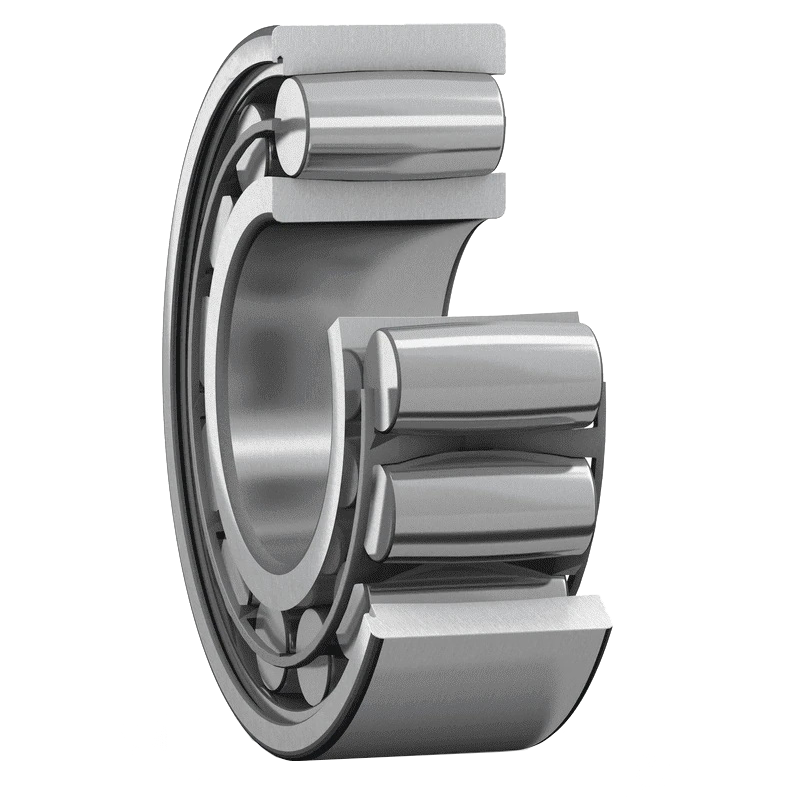
3-755 taper roller bearing 501.65×711.2mm
At a hot-strip mill, a roll-change crew is lowering a 699 kg chock assembly onto a backup roll. The bearing inside carries the roll separating force, absorbs axial thrust from housing deflection, and must keep the roll neck running true through repeated heat cycles. In that environment, a four-row inch taper roller bearing such as the 3-755 is judged less by its drawing dimensions than by how it is fitted, lubricated, preloaded, and inspected. The dimensions tell you it will fit. The work practices decide whether it will last.
At a glance
- Model: 3-755
- Type: Four row inch taper roller bearings
- Boundary dimensions (d×D×B): 501.65 × 711.2 × 520.7 mm
- Bore diameter (d): 501.65 mm
Application Context: Load, Stiffness and Access
Four-row inch taper roller bearings are built for heavy radial loads and controlled axial loads in a stiff housing. They appear in rolling-mill roll necks, casting-machine segments, large gearboxes, and other equipment where a single-row bearing would need an impractical housing width. This bearing uses inch boundary dimensions, so it often sits in legacy equipment where the surrounding chock, spacer stack and sealing arrangement are already fixed. That makes replacement discipline important: a new bearing cannot correct a worn seat or a distorted housing. The Four row inch taper roller bearings category shows the wider family, but the installation variables remain the same: clean seats, correct axial setting, and lubricant that reaches the loaded rollers.
The load ratings are high, but they assume even support. A cup that is cocked in its housing, or a shoulder that does not sit square, can put the roller system into edge loading long before the nominal radial load is reached. Check the housing bore and shaft seat for taper, out-of-roundness and fretting before you accept a replacement bearing.
The 3-755 at a Glance
Use the table as a fit-and-load reference, not as an installation instruction. Confirm every value against the current drawing and the machine data before ordering or fitting.
| Model | 3-755 |
|---|---|
| Type | Four row inch taper roller bearings |
| Boundary dimensions (d×D×B) | 501.65 × 711.2 × 520.7 mm |
| Bore diameter (d) | 501.65 mm |
| Outside diameter (D) | 711.2 mm |
| Width (B) | 520.7 mm |
| Weight | 699 kg |
| Basic dynamic load rating, radial (Cr) | 7,300,000 N |
| Basic static load rating, radial (Cor) | 25,600,000 N |
The 699 kg mass is a handling issue as much as a specification. Lifting points, slings and support cradles should be planned before the bearing is unpacked. Never lift a large tapered assembly by the rollers or by a cage; use the housing or a suitable fixture that supports the outer ring evenly.
Installation: Clean, Square and Controlled
Cleanliness is not a slogan in this size class. Grit that would be harmless on a small bearing becomes a lapping compound when it is trapped between a 501.65 mm bore and its seat. Work in a covered area, keep the bearing on a clean pallet, and cover the roll neck whenever it is not being measured. Before fitting, verify the housing and shaft against the drawing. Check that the shoulders are square, the fillet radii clear the bearing corners, and the seal surfaces are not worn. A heat fit may be specified for the inner rings; if so, use a controlled heater and a thermocouple, not an open flame. For outer rings, press or guide them into place with force applied to the ring being fitted, never through the rollers.
- Confirm seat diameters, shoulder squareness and fillet radii before assembly.
- Keep the bearing wrapped until the seat is clean and ready.
- Use controlled heat or mechanical press equipment; avoid impact loading.
- Check that spacers, shims and seals sit flat and are free of burrs.
- Record the as-fitted axial clearance or preload before the housing is closed.
After the housing is closed, rotate the assembly by hand or at low speed and listen for rubbing. A bearing of this mass can feel stiff when cold, but it should not feel lumpy. If it does, stop and find the cause before running the equipment. Check the seal lips and breather paths as carefully as the bearing itself; a pinched seal can destroy the lubricant film within a few hours of operation.
Lubrication: Flow, Film and Contamination Control
Large four-row bearings usually run in circulating oil systems when the application demands heat removal, or in grease when the housing design and duty cycle support it. Follow the machine builder’s method first. The lubricant must do three jobs: build a film between rollers and raceways, carry heat away from the load zone, and flush wear debris toward the filter or drain. For oil systems, viscosity selection depends on speed, operating temperature and the oil film required at the most heavily loaded roller. Too heavy an oil can starve the ends of the rollers; too light an oil may not survive the load. Filtration and water control matter as much as the oil grade. A 25.6 MN static rating does not protect a bearing from contaminated lubricant.
Keep breathers, return lines and drain paths clear. In grease service, confirm the fill volume and relubrication interval with the application data, and introduce grease slowly so it does not channel past the rollers. A common failure pattern is overgreasing a large housing until seals are displaced, followed by undergreasing because the maintenance team loses confidence in the practice. Use a measured routine and record it. Oil analysis is worth more than a calendar interval: a rising particle count or water content tells you about the housing before the bearing tells you with heat or noise.
Preload and Clearance: Follow the Stack, Not a Guess
Preload and clearance are system settings, not a universal number. In a four-row taper roller bearing, the axial position of the cups or cones is controlled by spacers, shims or a threaded adjustment. The target may be a small axial clearance, a zero-clearance setting, or a defined preload, depending on housing stiffness, speed and thermal growth. Do not borrow a value from a smaller single-row bearing. Measure at a stable temperature, use a dial indicator with a rigid magnetic base, and repeat the reading after rotating the assembly several times. If the drawing gives an endplay range, stay inside it and record the result. If it gives a preload, verify the method: preload can be set by torque, by axial displacement, or by measuring friction torque after run-in.
Thermal growth changes the setting. A roll neck that heats during operation may need more cold clearance than a bench measurement suggests. After the first controlled run, check temperature and axial play again. A bearing that runs hot and tight may be over-preloaded; one that is noisy under load may have lost its setting. Adjust the spacer stack, not the bearing. For the 3-755, record the shim pack and the measured setting so the next rebuild starts from data rather than memory.
Maintenance and Inspection: Read the Early Signals
Condition monitoring is more useful than a fixed replacement interval on heavy equipment. Track bearing temperature at the same load and speed points, watch vibration trends, and sample the oil for iron content and water. A sudden rise in metallic debris or a shift in vibration signature deserves a look before a scheduled shutdown. During roll changes, inspect seals, check for lubricant weeping, and look for fretting marks on spacers. Do not spin an unloaded large bearing with compressed air; without a load, rollers can skid and damage the raceways.
When the bearing is removed, keep the cup and cone pairs together if they are matched, and mark the housing positions. Photograph the spacer stack before disassembly. Clean and inspect the seats; a polished or fretted seat can destroy the next bearing even if the bearing itself is new. If the 3-755 is being replaced because of a temperature event, find the lubrication or setting cause first. Replacing a bearing without correcting the cause usually repeats the failure. A simple log of temperature, oil condition, axial setting and run hours will make the next diagnosis faster.
Procurement and Replacement Notes
Storage and identification are part of maintenance. Keep the bearing in its original package, flat and protected from moisture, until it is needed. Verify the marking on the ring against the drawing and purchase order. A drawing may call out 3-755 directly or use a legacy inch designation; the bearing number reference can help confirm the number before you commit a roll-change window to it. Check the load rating and boundary dimensions against the machine data, and confirm the lubrication method and seal arrangement with the application. For critical mill equipment, ask for a dimensional and marking check before shipment.
FIJ supplies this class of bearing to heavy-duty applications, and the practical details matter: how the bearing is packed, how the number is verified, and whether the drawing and application data match. If you are planning a replacement, share the housing drawing, speed, load and lubrication method with FIJ Bearing so the fit and support can be reviewed before delivery. Request a quote from FIJ for the 3-755 bearing and include your required delivery window.