
HR30305CP6 taper roller bearing 25×62mm
News & Updates
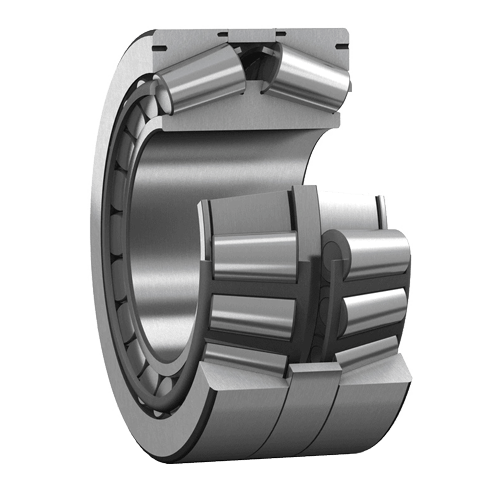
HR30305CP6 taper roller bearing 25×62mm
Combined radial and axial loads frequently induce premature failure in rotating assemblies when component geometry does not align with the application’s contact angle requirements. A maintenance engineer tasked with replacing a degraded unit often encounters dimension creep between manufacturing batches or obscure part codes that obscure interchangeability. Misalignment here translates to increased friction, heat generation, and potential catastrophic shaft damage. The solution requires identifying a metric design single row taper roller bearing with exact boundary dimensions and verified load characteristics, specifically targeting the HR30305CP6 configuration where precision meets structural demand.
At a glance
- Parameter: Value
- Inside Diameter: 25 mm
- Outside Diameter: 62 mm
- Width: 18.25 mm
Analyzing Radial-Axial Load Dynamics in 25×62 Tapered Assemblies
When evaluating replacements, the first priority is confirming that the new component manages the projected vector sum without exceeding fatigue limits. The HR30305CP6 features a basic dynamic radial load rating of 41,852 N and a static rating of 44,832 N, providing substantial margin for high-stress environments such as gearboxes, conveyor drive shafts, or agricultural equipment hubs. This load density supports applications where combined loading creates significant force vectors acting simultaneously on the bearing. The capacity also protects against plastic deformation during installation torque or momentary stalling events.
Selecting the correct cage type modifies the performance envelope further. A pressed steel cage prioritizes weight reduction and lower windage losses, making it ideal for continuous duty cycles at elevated speeds. Conversely, a pin-type cage delivers enhanced resilience against impact and shock loads, extending service life in heavy machinery or oscillating operations where inertial forces fluctuate rapidly. Engineers must balance these attributes against the application’s duty cycle and acceleration profiles. This choice directly influences thermal management and speed capabilities.
Operating boundaries also depend on the sealing arrangement. Adequate protection against contaminant ingress preserves lubricant viscosity and ensures the bearing sustains performance near its rated limits. Reviewing the Single row taper roller bearings category facilitates access to variants optimized for specific industrial environments, ensuring the chosen design aligns with both mechanical constraints and operational longevity requirements.
The HR30305CP6 Structural Identity and Series Context
This metric design unit belongs to the HR303 series, which standardizes the taper ratio and raceway profiles to ensure broad interchangeability across manufacturers. The series designation confirms adherence to international boundary standards, simplifying global sourcing and inventory management. The 18.25 mm width indicates a relatively compact axial profile, useful where space is constrained but radial rigidity remains paramount. This geometry defines the contact angle inherent to the design, governing how axial stiffness relates to radial load capacity.
Boundary dimensions are fixed at 25 × 62 × 18.25 mm, while the cylindrical bore allows for straightforward mounting onto matching shafts via interference fits. Precise control of the shaft tolerance class is essential to achieve the recommended clamping force, which ensures optimal load transfer through the rolling elements and prevents fretting corrosion at the inner ring interface. Weighing 0.276 kg, the component adds minimal mass to the rotor system, aiding in balancing efforts and reducing rotational inertia.
Speed ratings serve as critical guidelines for lubrication strategy. The reference speed reaches 5,944 r/min, while the limiting speed stands at 8,444 r/min, contingent upon the lubrication method and cage type. Oil mist or spray systems can sustain operation closer to the limiting threshold by efficiently managing heat dissipation. Grease lubrication may necessitate derating to protect seal integrity and maintain a stable fluid film. Deviations from these benchmarks require thorough derating calculations based on actual viscosity ratios and operating temperatures.
Cross-Reference Mapping and Dimensional Equivalence
Successful cross-referencing extends far beyond matching outside diameter and width values. The interchange program for this model requires validation of the rolling element contour and the contact angle derived from the bore-to-outer-diameter ratio. A direct physical fit does not guarantee functional equivalence if the internal geometry differs even marginally. Manufacturers producing equivalents to the original European design must adhere to strict tolerances to maintain uniform load distribution across all rollers.
Discrepancies in edge relief or fillet radius can create stress concentration zones, leading to early spalling or raceway cracking. Substitutions with divergent internal geometries alter the axial stiffness and load-carrying direction, potentially compromising the alignment of adjacent components. A rigorous evaluation involves comparing technical drawings or CAD models rather than relying solely on alphanumeric part codes. Engineers must verify that the replacement unit replicates the load path defined by the original design.
Before finalizing a substitute, engineers should execute the following verification steps:
- Compare bore tolerance and surface roughness against shaft specifications to ensure proper interference fit.
- Assess cage retention and lubrication capacity for peak operating temperatures in the specific application.
- Verify preload settings when utilizing matched pair configurations or opposing mounting arrangements.
- Inspect raceway hardness case depth to resist brinelling under severe overload or shock conditions.
Adhering to these points ensures that substitutions preserve the mechanical integrity of the assembly. Consult a bearing number reference to interpret suffix codes that denote adjustments in internal clearance, precision grade, or material treatment, which can significantly impact interchangeability.
Interchange Programs and Replacement Protocol
Maintenance teams often rely on interchange matrices to streamline procurement and reduce downtime. The HR30305CP6 serves as a replacement candidate for legacy models sharing the same dimensional envelope and series architecture. However, reliance on base numbers alone carries risk due to suffix variations that alter performance characteristics. Codes indicating adjusted internal clearance modify the initial preload state, affecting torsional stiffness, vibration levels, and thermal expansion behavior.
Assuming complete interchangeability without decoding suffixes can lead to excessive end-play or binding within the housing. Programs that group the 303..CP6 variant with other members of the 303 family recognize commonality in cup and cone mating, allowing for flexible sourcing while preserving mechanical function. This approach supports standardization across different equipment platforms. Always correlate the specific suffix with the manufacturer’s coding system to understand any deviation from standard geometry or heat treatment processes. Validating these details prevents costly field failures and ensures the replacement operates within the designed performance window.
Load Capacity Verification for Critical Applications
Technical documentation must accompany every procurement action to justify the selection and calculate expected service life. L10 life estimation requires determining the equivalent dynamic load using the appropriate factor Y for the contact angle. Engineers should apply a safety factor to account for contamination levels, lubrication quality, and load spectrum variability. The static rating provides a safeguard against permanent deformation, while the dynamic rating guides fatigue life predictions.
| Parameter | Value |
|---|---|
| Inside Diameter | 25 mm |
| Outside Diameter | 62 mm |
| Width | 18.25 mm |
| Basic Dynamic Load Rating | 41,852 N |
| Basic Static Load Rating | 44,832 N |
| Reference Speed | 5,944 r/min |
| Limiting Speed | 8,444 r/min |
| Weight | 0.276 kg |
The load ratings indicate suitability for medium to heavy-duty applications requiring robust axial support alongside radial stability. Ensure the calculated life meets the service requirement based on actual equivalent dynamic load rather than assuming the rating value guarantees infinite life. Proper lubrication remains the most influential variable in achieving predicted durability.
Sourcing Accuracy Through Verified Component Numbers
Reliability stems from partnering with manufacturers who prioritize dimensional fidelity and material consistency. FIJ provides engineering support to validate that the selected component meets exact performance criteria, minimizing the risk of substitution errors. By focusing on verified data and structured interchange analysis, maintenance planning becomes more efficient and less prone to operational disruption. Contact FIJ Bearing for technical consultation and competitive pricing on precision rotation solutions.”}