
KG060XV0 four-point contact ball bearing 6×8mm
News & Updates
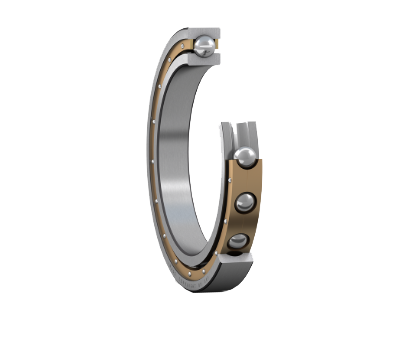
KG060XV0 four-point contact ball bearing 6×8mm
Machine designers rarely get the space they ask for. A gearbox wall thins out, the shaft diameter is fixed by torque, and the bearing still has to carry combined radial and axial load without buzzing at 3,000 rpm. Vibration and misalignment usually start right there. The KG060XV0 is a thin section four-point contact ball bearing built for that exact corner of the problem.
At a glance
- Model: KG060XV0
- Type: Thin section four-point contact ball bearing
- Series: KG series
- Boundary dimensions (d × D × B): 6 × 8 × 1 inch
The 6 × 8 × 1 Inch Envelope, Read Literally
Model numbers in this series are dimensional, not decorative. The KG060XV0 has a 6 inch bore (152.4 mm), an 8 inch outside diameter (203.2 mm) and a 1 inch width (25.4 mm). That leaves a one-inch radial section between bore and OD — the feature that lets a designer pass a large shaft through a housing that would otherwise need a far heavier wall.
The trade-off is stiffness. A thin ring deflects under load, so the mounting shoulder and housing roundness matter more than they would on a heavy-section bearing. Machined housings, not pressed ones, are the right partner for this part.
What 42,259 N Dynamic and 51,123 N Static Really Mean
The published figures are radial-basis ratings: 42,259 N basic dynamic and 51,123 N basic static. Their ratio, roughly 1.21, tells you this is a bearing sized for stiffness rather than for a long L10 life at extreme load — a normal signature of thin section geometry.
Four-point contact geometry is why one row can do this job. Each ball touches a gothic arch raceway at up to four points, so the KG060XV0 accepts radial load, axial load in either direction, and a useful degree of moment in a narrow package. For buyers, that often means one bearing replaces a paired angular contact arrangement: fewer parts, a shorter stack, one lubrication point. Browse the Thin section four-point contact ball bearings category to see how other bores in this KG series scale.
Brass Cage, Class 1 Precision: Where Ratings Meet Reality
The cage is solid brass, machined rather than pressed. It holds ball spacing under shock, tolerates higher temperatures than polymer cages, and does not embrittle with age — a genuine advantage in slow-rotating, high-vibration equipment such as positioning tables and swivel joints.
Precision Class 1 per ABEC 1F sets running accuracy and functional tolerances for general industrial duty. It is not a spindle grade, and buyers chasing sub-micron runout should specify a tighter class before ordering. For most indexing and oscillating applications, Class 1 is the sensible cost point.
Checking the Data Before You Release a Purchase Order
| Model | KG060XV0 |
|---|---|
| Type | Thin section four-point contact ball bearing |
| Series | KG series |
| Boundary dimensions (d × D × B) | 6 × 8 × 1 inch |
| Weight | 2.3134 kg |
| Cage | Solid brass |
| Rows | Single row |
| Precision grade | Precision Class 1 per ABEC 1F |
| Basic dynamic load rating, radial (Cr) | 42,259 N |
| Basic static load rating, radial (Cor) | 51,123 N |
Two details catch buyers out. First, weight: at 2.3134 kg the KG060XV0 is light enough to handle by hand but heavy enough that inertia and freight calculations should not ignore it. Second, cross-referencing — the original European design’s numbering is widely quoted, so verify bore, outside diameter and width line by line against our bearing number reference instead of trusting a prefix match.
Confirm lubrication, clearance and mounting orientation against your own application data before release. FIJ Bearing supplies this model with dimensional inspection reports on request.
Request a quote — send your drawing, quantity and required delivery date to FIJ and we will confirm price and lead time for the KG060XV0.