
L10QA508YH deep groove ball bearing 140×152.4mm
News & Updates
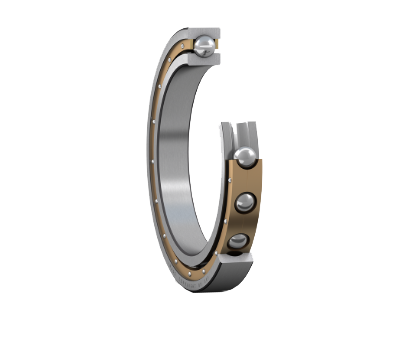
L10QA508YH deep groove ball bearing 140×152.4mm
Taming Axial Drift in Confined Rotational Assemblies
At a glance
- Parameter: Value
- Bore Diameter: 140 mm
- Outside Diameter: 152.4 mm
- Width / Cross Section: 6.35 mm
Rotational systems frequently suffer catastrophic failure when engineers underestimate combined radial forces against aggressive spatial constraints. Accumulated vibration travels directly through narrow grooves, accelerating cage fatigue and generating localized heat spots that warp raceways. Even fractional degrees of angular misalignment compound rapidly into premature seizure events. Design teams often attempt to solve this by scaling up entire mounting housings, which immediately inflates weight budgets, increases moment inertia, and complicates chain-of-custody logistics. The L10QA508YH resolves this bottleneck by deploying a ten-type thin section architecture that preserves full deep groove capacity within a slender six-point-three-five millimeter cross-section. This concentrated geometry redistributes contact angles across hardened steel balls, allowing simultaneous absorption of axial thrust and radial loading without demanding oversized structural pockets. When integrated correctly, the component neutralizes the vibration cascades that typically terminate compact actuators and sensor mounts mid-cycle.
Spec Sheet Baseline for Design Integration
Understanding the mechanical envelope establishes the foundation for reliable implementation. The dimensional architecture follows a strict cylindrical bore configuration, ensuring straightforward interference fit calculations on rotating shafts. Outside diameter expansion remains minimal relative to inner race diameter, preserving torsional rigidity while minimizing rotational mass. Thermal expansion coefficients align closely with standard alloy steels used in automation frames, preventing fretting corrosion during prolonged duty cycles. You will notice the cross-sectional width locks at 6.35 millimeters, leaving precise radial clearance zones accessible during housing machining. Load ratings indicate a deliberate emphasis on radial capability, though the deep groove profile inherently supports moderate axial redirection. Refer to the baseline parameters below to validate your preliminary CAD models against actual physical boundaries before committing to heavy tooling changes.
| Parameter | Value |
|---|---|
| Bore Diameter | 140 mm |
| Outside Diameter | 152.4 mm |
| Width / Cross Section | 6.35 mm |
| Basic Dynamic Radial Load (Cr) | 3438 N |
| Basic Static Radial Load (Cor) | 5587 N |
| Basic Dynamic Axial Load (Ca) | 11588 N |
| Limiting Speed | 3356 r/min |
| Weight | 0.1134 kg |
| Bore Type | Cylindrical |
| Series Designation | L10QA |
Ideal Application Profiles for the L10QA508YH
Compact servo-driven rotary tables benefit heavily from this specific load distribution mechanism. Medical imaging gantries and optical alignment stages require predictable friction characteristics without introducing excessive drag torque. The reduced inertial mass enables faster acceleration ramps in pick-and-place mechanisms where cycle time directly dictates throughput metrics. Aerospace actuator linkages also respond favorably to the tight dimensional tolerance stack-ups characteristic of ten-type components. Laboratory automation equipment, particularly those handling vacuum-compatible fluids, leverages the clean geometric footprint to minimize dead volume inside sealed environmental chambers. Lightweight ground-based robotic joints utilize the lower overall mass to extend battery endurance without sacrificing joint stiffness. When scanning your current bill of materials, you will likely identify subsystems currently relying on thicker, heavier alternatives that simply cannot accommodate updated chassis footprints. Integrating a catalog entry from our Thin section deep groove ball bearings category usually resolves spatial conflicts without requiring custom housing redesigns.
Operating Envelope and Speed Boundaries
Rotational velocity dictates thermal management requirements more aggressively than static load magnitude in thin-profile assemblies. The documented limiting speed sits precisely at 3356 revolutions per minute under standard grease lubrication conditions. Pushing past that threshold introduces centrifugal force spikes that drive balls outward against the outer raceway, fundamentally altering contact geometry and accelerating subsurface fatigue. Ambient temperature fluctuations between minus ten degrees Celsius and plus eighty degrees Celsius remain manageable for conventional chromium steel variants, provided thermal expansion differentials stay within acceptable shaft-to-housing tolerances. Viscosity selection for synthetic lubricants becomes critical above sixty degrees Celsius, as thinner oils rapidly reduce hydrodynamic film thickness. Dry-operating environments demand careful attention to cage material selection and pre-loading adjustments to maintain consistent rolling resistance. Continuous temperature monitoring during initial commissioning phases prevents catastrophic skidding events that degrade polished surface finishes within hours.
Selection Checks Before You Purchase
Engineering validation requires systematic verification across multiple interface points. Skipping routine audits guarantees unexpected field failures regardless of published catalog rating claims. Perform the following procedural checks during your specification phase to guarantee mechanical compatibility:
• Verify shaft hardness exceeds fifty-four Rockwell C to prevent raceway denting during press-fit installation.
• Confirm housing bores provide sufficient radial clearance for thermal expansion without inducing excessive residual preload.
• Calculate expected bending moments on the shaft to ensure elastic deflection stays below zero-zero-one millimeters under peak loading.
• Assess contamination exposure levels and specify appropriate shield configurations or external sealing methods accordingly.
• Validate lubricant compatibility with existing maintenance schedules and industrial cleaning solvents used during assembly.
• Check adjacent component clearances to guarantee minimum two-millimeter gap around the outer ring perimeter during maximum deflection scenarios.
Document each finding in a formal review ledger before submitting purchase orders. Mismatched tolerances create false expectations about longevity and performance consistency.
Mounting Tolerances and Supplier Validation
Precision manufacturing translates directly into operational reliability, yet improper installation quickly undermines even the highest grade components. Surface finish on both mating shaft and housing bores must adhere to Ra values below zero-four micrometers to avoid micro-vibration initiation. Torque specifications for locking collars or set screws dictate exact preload retention, eliminating creeping motion during reverse loading transients. Quality documentation should accompany every shipment, tracking heat treatment batches and dimensional inspection reports against recognized industry standards. Cross-referencing part identifiers through our internal bearing number reference clarifies substitution possibilities when legacy components enter obsolescence cycles. Technical support personnel can review your assembled drawings and confirm interference allowances before production commits to inventory buildup. Proper validation protocols eliminate guesswork and establish repeatable performance baselines across manufacturing runs. Sourcing components through FIJ Bearing ensures direct engineering consultation rather than generic sales routing, streamlining the transition from prototype to volume deployment.
Request a quote for L10QA508YH and related thin section bearings.