
NNU4956KRCC0P4Y cylindrical roller bearing 280×380mm
News & Updates
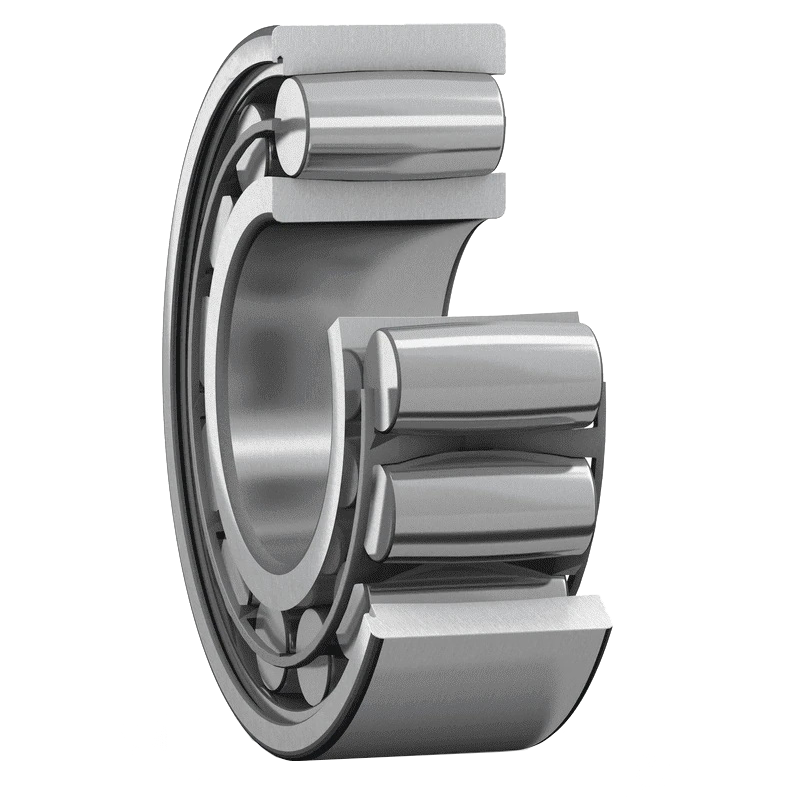
NNU4956KRCC0P4Y cylindrical roller bearing 280×380mm
NNU4956KRCC0P4Y is a 280×380×100 mm double-row super-precision cylindrical roller bearing: 280 mm tapered bore, 380 mm outside diameter, 100 mm width, 33.1 kg. In practice those numbers set the service rules. The 1/12 tapered bore (KR) lets the inner ring seat on the shaft with controlled interference; the 100 mm width and double-row layout provide the high-rigidity section that keeps roller sets parallel under load; and the P4Y precision class demands matching care in mounting and lubrication. With 959,691 N dynamic and 2,229,508 N static radial ratings, plus 1,906 r/min reference and 2,412 r/min limiting speeds, most failures begin before the load limit—at fit, preload, contamination, or lubrication.
At a glance
- NNU4956KRCC0P4Yis a 280×380×100 mm double-row super-precision cylindrical roller bearing: 280 mm tapered bore, 380 mm ou
- A used bearing always tells a story, but not every mark is a defect. Light polishing on the raceway and a uniform roller
First, separate normal wear from a failure pattern
A used bearing always tells a story, but not every mark is a defect. Light polishing on the raceway and a uniform roller track can be normal run-in. A failure pattern is local, progressive, and repeatable: flaking that starts at one point, a rib score that widens, cage pockets with bright wear edges, or grease/oil that has darkened and hardened. The table below is a practical triage guide for this double-row super-precision type.
| Observation | Likely mechanism | First check |
|---|---|---|
| Raceway flaking with a narrow track | Excess preload or poor fit | Tapered bore drive-up and shaft roundness |
| Rib/roller-end scoring | Oil-film breakdown or trapped axial load | Viscosity at operating temperature and locating arrangement |
| Cage pocket wear | Starvation, skidding, or vibration | Oil flow to both rows and light-load running |
| Bore creep or fretting | Insufficient interference or soft shaft | Shaft hardness, taper contact, and drive-up distance |
Use the pattern before choosing a remedy. Replacing a bearing without correcting the root cause usually moves the same damage to the new unit within a few months.
Raceway flaking: usually a preload or fit problem, not a steel problem
On a high-rigidity double-row cylindrical roller bearing, raceway flaking often starts where the roller set is over-preloaded. The root cause is rarely the steel grade. More common is a tapered bore driven too far up the shaft, a housing that distorts the outer ring, or a shaft shoulder that is not square. A 280 mm bore with KR taper is sensitive to axial drive-up: a few hundredths of a millimetre changes internal clearance and contact stress. The same applies to a housing bore with out-of-roundness or a poor surface finish. In a super-precision assembly, the fit is part of the bearing function. Check the bearing number reference before ordering a replacement, because the KR and P4Y suffixes change the mounting procedure, not just the part number.
Prevention is measurement-led. Record bore and shaft diameters at four positions, verify taper contact by blue check, and heat the bearing uniformly if interference mounting is required. Do not hammer the rings. Recheck internal clearance after drive-up and confirm that the housing and shaft are clean and burr-free. If flaking appears on both rows at the same angular position, inspect the housing alignment and shaft deflection before installing NNU4956KRCC0P4Y again.
Rib and roller-end scoring under high-rigidity duty
The rib-guided brass cage and the roller ends carry more responsibility than many users expect. Scoring or discoloration at the roller ends points to an oil-film problem: viscosity too low for the actual operating temperature, flow that does not reach the rib contact, or fine particles that bridge the contact. High-rigidity series bearings are often run at lower clearance and higher local stress, so the lubricant has less margin. If the machine runs near the 1,906 r/min reference speed, verify that the oil grade and flow match the measured temperature, not the startup temperature.
Also check axial loading. A cylindrical roller bearing is primarily radial, but misalignment, thermal growth, or a trapped axial force can push the roller ends against the ribs. Correct the locating arrangement and allow the non-locating bearing to slide as designed. Filtration matters: a 10 µm or finer filter in the circulation line is more useful than increasing oil volume after damage has started.
Cage wear and brass-cage guidance faults
A rib-guided brass cage is durable, but it is not immune to starvation or vibration. Wear appears as polished pockets, enlarged clearances, or brass debris in the oil. In low-load, high-speed running, rollers can skid instead of roll; in a starved supply, the cage guidance surface runs without a film. Both conditions are installation or operation issues, not a reason to change to a different cage without engineering review.
- Inspect cage pocket clearances and look for bright, stepped wear rather than uniform polishing.
- Confirm oil flow reaches both rows and the rib guidance area, especially after a filter change.
- Check for shaft currents, loose fits, or vibration that make the cage rattle at light load.
- Review startup procedures: pre-lubricate before run-in and avoid long idling at high speed.
If the cage is worn but the raceways are clean, focus on lubrication and operating load. If raceway flaking accompanies cage wear, treat the assembly as a preload or alignment failure first.
Mounting and lubrication checks that stop repeat failures
Most repeat failures are decided before the machine reaches operating temperature. Clean the shaft and housing, verify shoulder squareness, and measure the housing bore for taper and out-of-roundness. For this 33.1 kg unit, use a controlled heater and lifting equipment rather than force. After mounting, rotate the shaft by hand and listen for roughness; a super-precision bearing should feel smooth and slightly preloaded, not tight or gritty. The product family is shown in the Cylindrical roller bearings, double row, super-precision category, where dimensional and suffix details can be cross-checked against the application.
Lubrication checks should be equally specific. Confirm oil viscosity at operating temperature, not ambient; verify flow through the bearing before load is applied; and keep water and particles out of the housing. If the application runs near the limiting speed of 2,412 r/min, monitor temperature and vibration during the first hours. A rising temperature trend after a bearing change is a warning, not a normal break-in curve.
Replacement decisions and the quote route
Replace the bearing when flaking has exposed subsurface steel, when cage pocket wear changes roller guidance, or when the bore fit has spun and damaged the shaft. Do not reuse a bearing that has been overheated or driven up incorrectly; the internal clearance may look acceptable while the contact pattern is already wrong. For a scheduled rebuild, keep the failed NNU4956KRCC0P4Y and its oil sample for inspection—the evidence is useful when setting the next mounting procedure.
FIJ Bearing supplies this double-row super-precision cylindrical roller bearing for applications where rigidity, accurate rotation, and repeatable mounting matter. Send the operating speed, load direction, lubrication method, and shaft/housing fits with your inquiry so the quote can include the right suffix and mounting guidance. Request a quote from FIJ for NNU4956KRCC0P4Y and avoid repeating the failure mode that caused the last shutdown.