
99600-90041 taper roller bearing 152.4×254mm
News & Updates
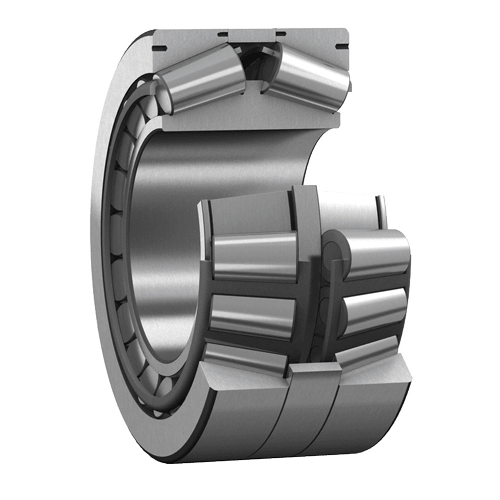
99600-90041 taper roller bearing 152.4×254mm
Q: Can 99600-90041 be replaced by the 99600-99100 interchange number without changing the housing? A: Usually yes only after confirming the full assembly envelope, because both numbers sit in the 99600 series but an interchange listing can refer to a matched double-row assembly rather than a single bearing. The 99600-90041 is a double row inch taper roller bearing with a 152.4 mm bore, 254 mm outside diameter, and 133.35 mm assembly width. Treat the cross-reference as a starting point, then verify the direct-mount 2TS-DM configuration, shoulder positions, and lubrication path before release to procurement.
At a glance
- Specification: Value
- Model number: 99600-90041
- Category: Double row inch taper roller bearings
- Series: 99600
What the 99600-90041 Actually Is
The 99600-90041 belongs to the Double row inch taper roller bearings category, not the single-row tapered roller family that many buyers first compare it with. Its type description is Matched Tapered Roller Bearings, Double Row – 2TS-DM Type (Assembly, Direct Mount). That wording matters more than the model number alone. A direct-mount assembly is built to be installed as a pair in a prepared housing, with the cups and cones matched to control internal clearance and load sharing.
In practical terms, the bearing is a packaged system: two rows of tapered rollers, an inch-based envelope, and a width of 133.35 mm across the assembly. The 152.4 mm bore and 254 mm outside diameter place it in a heavy-duty inch series, often seen in industrial gearboxes, mill equipment, and large rotating assemblies where axial and radial loads occur together. Buyers should not treat the dimensions as the only definition. Two assemblies can share the same d, D, and B yet differ in contact angle, cage design, spacer geometry, or preload setting.
Because the unit is inch, metric values in the catalog are inspection conversions. The controlling envelope is still the inch series: 152.4 mm and 254 mm are clean conversions of 6.000 in and 10.000 in. A nominally equivalent metric bearing may not carry the same internal fit, which is where many cross-reference programs first go wrong.
Reading the Interchange Data Without Guesswork
The listed interchange is 99600 – 99100 (Y1S-99100). That does not mean every 99600-99100 label on a shelf is automatically a drop-in replacement for the 99600-90041 assembly. Interchange numbers are useful search keys, but they describe a family relationship, not a guaranteed bill of materials. A proper check compares the assembly type, mounting style, row count, width, and any suffix that indicates matched sets or direct-mount preparation.
The bearing number reference helps separate the base series from the assembly code. In the 99600 series, the first group identifies the tapered roller family, while trailing digits and separators often point to a matched arrangement, a cup and cone combination, or a mounting detail. Read Y1S-99100 as a family indicator unless the supplier provides a dimensional and functional comparison sheet.
Ask three questions before accepting a cross-reference: Does the proposed part have the same double-row direct-mount arrangement? Does it keep the 133.35 mm assembly width without extra shims or spacers? And does the supplier document internal clearance or preload? If not, the interchange number is a lead, not a release document. The 99600-90041 may cross to 99600-99100 in a catalog search, but the purchase order still needs the assembly-level specification.
Dimension and Fit Checks That Matter
The table below records the published envelope and type data. Use it as the minimum inspection checklist, then add the mounting and lubrication details from the equipment drawing.
| Specification | Value |
|---|---|
| Model number | 99600-90041 |
| Category | Double row inch taper roller bearings |
| Series | 99600 |
| Type | Matched Tapered Roller Bearings, Double Row – 2TS-DM Type (Assembly, Direct Mount) |
| Inside diameter d | 152.4 mm |
| Outside diameter D | 254 mm |
| Thickness width B | 133.35 mm |
| Number of rows | Double row |
| Unit of measurement | Inch |
| Interchange | 99600 – 99100 (Y1S-99100) |
Start with the bore and outside diameter, but do not stop there. The 133.35 mm width is an assembly width, not a simple single-bearing width. If a cross-referenced part is dimensionally correct at the bore and OD but different in effective width, the clamping path can change. That affects preload, bearing seat contact, and the position of any sealing or lubrication features.
Also verify corner radii, cup shoulder locations, and lubrication holes or grooves if the drawing shows them. A direct-mount assembly may rely on the housing shoulder to set axial position. In that case, a small change in cup back-face location is more important than the nominal envelope. Inspectors should record actual measurements at assembly level, not only on individual components.
Where 99600-99100 Sits in the 99600 Series
The 99600-99100 reference sits close enough to the 99600-90041 that many databases present them as alternatives. That is useful for a first-pass search, but the 99600 series contains multiple matched arrangements and mounting variants. Two bearings can share the same basic bore and outside diameter while using different internal geometry for axial load, radial load, or stiffness. The series logic is a family map, not a substitution approval.
For engineering comparison, ask for a side-by-side sheet covering d, D, B, row count, contact angle, dynamic and static load ratings, limiting speed, cage material, and recommended mounting practice. If the data sheet only repeats the envelope, it is not enough for a critical application. A double-row tapered assembly often carries combined loads, so the load-zone relationship between the two rows is part of the product definition.
Compare the assembly drawing rather than the catalog line. It should show how the two rows are matched, how the cups are positioned, and whether the unit is a complete direct-mount assembly. When those details align, the 99600-99100 reference can be a valid procurement route. When they do not, the lower-cost cross-reference may create rework risk that outweighs the saving.
How Double-Row Direct-Mount Assemblies Compare in Interchange Programs
Interchange programs tend to rank bearings by dimensions first and by internal design second. For single-row bearings that approach often works. For a double-row direct-mount assembly, it can miss the features that make the part installable. The following comparison points matter most when a buyer is moving between equivalent numbers.
- Mounting style: Confirm that the replacement is a complete 2TS-DM direct-mount assembly, not two separate single-row bearings supplied as a kit.
- Matched rows: Check that the two rows are matched for preload or clearance and that the supplier states the setting method.
- Assembly width: Verify the 133.35 mm width across the complete unit and the location of clamping faces, not only the cone width.
- Load direction: Compare the contact angle and the ability to share combined radial and axial loads in the same housing arrangement.
- Lubrication path: Confirm oil holes, grooves, and seal interfaces match the equipment drawing so that grease or oil reaches both rows.
The list is short because these points usually decide whether an interchange works. A bearing that passes a dimensional check but fails on mounting style can fit on the bench and fail in service. For maintenance buyers, the safest comparison is between complete assemblies, not between catalog numbers alone.
Procurement Risks in Cross-Referenced Bearings
The biggest risk in an interchange program is not a wrong number in a database. It is a correct number attached to an incomplete assembly. A supplier may list the 99600-90041 equivalent but deliver a matched set without the direct-mount preparation, or with a different internal clearance. The part may look right at the outer envelope and still change the preload when the housing is tightened.
Documentation should travel with the quote: the assembly drawing, material and heat-treatment specification, inspection record for bore and outside diameter, and a statement of internal clearance or preload. For critical applications, request a dimensional report at assembly level and confirm markings on cups and cones. Traceability also matters: lot numbers, packaging, and preservation method should match the purchase specification.
Price comparisons are meaningful only after the scope is equal. A lower quotation that excludes matching, documentation, or assembly-level inspection is not a like-for-like alternative. Buyers should also confirm the unit of measurement on the inspection plan. The product is inch-based, so metric conversions should be treated as reference values unless the drawing explicitly calls for metric inspection.
Quote and Verification Path
For a replacement or new-build requirement, send the equipment drawing, the 99600-90041 model number, and any known interchange reference such as 99600-99100 (Y1S-99100). Include the mounting arrangement, load direction, lubrication method, and required documentation. That allows FIJ Bearing to check the assembly against the application rather than matching numbers alone.
The verification path is straightforward: confirm the envelope, confirm the direct-mount double-row configuration, confirm the internal setting, and then release the order. If a cross-reference is proposed, ask for the comparison sheet before approval. This is the difference between an interchange program that reduces downtime and one that creates a second repair.
Request a quote from FIJ for 99600-90041 and let our engineers verify the interchange before shipment.