
3877R/3820R tapered roller bearing 41.275×85.725mm
News & Updates
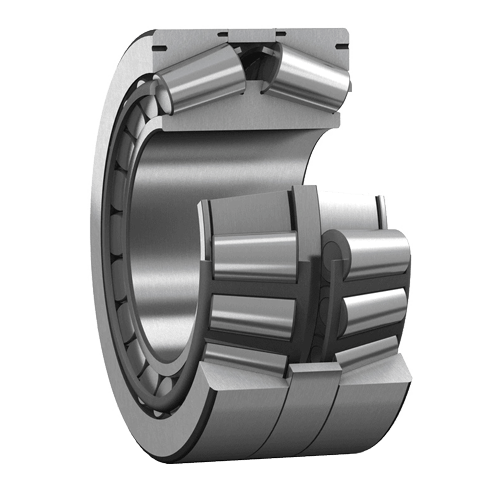
3877R/3820R tapered roller bearing 41.275×85.725mm
Edge stress is the usual failure mode when a 41.275 mm shaft carries radial load plus a persistent axial push. The 3877R/3820R single row inch tapered roller bearing answers that condition with a 41.275 × 85.725 × 30.162 mm envelope: a cup and cone pair that spreads load along the roller length instead of concentrating it at one shoulder. Its 108,850 N radial dynamic rating and 112,369 N static rating place it in the medium-duty class for gearboxes, axle supports and industrial wheel hubs that still use inch bore conventions.
At a glance
- Edge stress is the usual failure mode when a 41.275 mm shaft carries radial load plus a persistent axial push. The 3877R
- Load ratings only become useful when they are read against speed, lubrication and mounting. The table below translates t
Load and speed envelope that shapes the selection
Load ratings only become useful when they are read against speed, lubrication and mounting. The table below translates the published data for the 3877R/3820R into selection signals rather than a spec-sheet recital.
| Parameter | Value | Selection read |
|---|---|---|
| Bore d | 41.275 mm | Inch-series shaft seat; verify with inch instruments, not a rounded metric equivalent. |
| Outside diameter D | 85.725 mm | Housing bore and shoulder squareness matter as much as diameter. |
| Width B | 30.162 mm | Check effective cup and cone widths in the housing drawing. |
| Cr radial dynamic | 108,850 N | Use for radial-equivalent life calculations after axial load factors. |
| Cor radial static | 112,369 N | Static safety check for shock, parking loads and assembly preload. |
| Reference speed | 4,254 r/min | Planning figure for oil or grease selection; not a continuous target. |
| Limiting speed | 5,985 r/min | Thermal ceiling under suitable lubrication and cooling. |
| Weight | 0.791 kg | Handling and shipping check; also indicates medium-duty mass. |
| Cage | Pressed steel or pin type | Pressed steel for general duty; pin type when shock and roller guidance demand more. |
| Series | 3800R | Use to confirm cup-cone family and adjacent sizes. |
The 4,254 r/min reference speed is the more useful planning figure. In a grease-lubricated hub or conveyor pulley, continuous operation near 5,985 r/min leaves little margin for heat, grease channeling or seal drag. If the duty cycle spends time above the reference speed, confirm oil flow, cooling and cage choice with the application data, not just the catalog limit.
Applications that justify this inch-size tapered roller
The 3877R/3820R fits where a single-row tapered bearing must take combined radial and axial load in one direction and be opposed by a second bearing. Typical candidates are gearbox pinion shafts, differential and axle support positions, agricultural implement hubs, conveyor pulley bearing blocks and industrial wheel spindles with inch-dimension seats. The 41.275 mm bore is the giveaway: these are rarely new metric designs; they are repair, replacement or low-volume machines built around inch shafting.
It is not a drop-in answer for pure radial load at high speed. In that duty, a cylindrical roller or deep groove bearing can be lighter and cooler.
When axial load reverses, the mounting needs a second tapered bearing or a different arrangement; a single-row unit only controls one direction. That matters on reversing conveyors, steering axles and some winch drums, where the bearing pair must be set with the correct end play or preload. Compare the housing envelope and shaft seat against the family before locking the design.
Operating conditions: speed, lubrication, misalignment and heat
Tapered roller bearings tolerate high radial load, but they are less forgiving of misalignment than spherical designs. This bearing should be mounted with shaft and housing seats machined to a common centerline; a pressed steel cage does not correct housing distortion. For most industrial drives, oil or lithium-complex grease will cover the 4,254 r/min reference zone, but the limiting speed depends on heat rejection. A sealed, grease-filled hub running continuously at the limit will not perform like an oil-circulated gearbox test.
Preload is the other hidden variable. Too little preload lets rollers skid and cage pockets wear; too much raises friction and shortens grease life.
Set the end play from the mounting arrangement, not from a generic number. The cup and cone must be seated squarely, and the axial clearance should be checked after the housing reaches normal operating temperature. On applications with shock, a pin-type cage may be specified when roller guidance and robustness matter more than cost.
Selection checks before ordering
Before a purchase order is released, confirm the bearing as a system part rather than a catalog number. The checks below catch the errors that show up after assembly, when access is expensive.
- Verify the 3877R/3820R against the drawing and use the bearing number reference to confirm the 3800R series, cup-cone combination and any suffix differences.
- Measure the shaft seat, housing bore and shoulder fillets. Inch dimensions should be checked with inch instruments; converting 41.275 mm to 41 mm or 85.725 mm to 85 mm creates a loose or distorted fit.
- Confirm load direction and the opposing bearing. A single-row tapered bearing controls axial load in one direction.
- Recalculate equivalent radial load with the actual axial load, shock factor and duty cycle. The 108,850 N dynamic rating is a starting point, not a guaranteed application life.
- Check continuous speed against lubrication. If the duty cycle sits near 5,985 r/min, review oil flow, grease type, seal drag and thermal growth.
- Decide cage style. Pressed steel is the general-purpose choice; pin type should be justified by shock, vibration or high-speed roller guidance needs.
- Review sealing and lubrication access. Contaminated grease will shorten life before the load rating becomes the limiting factor.
- Confirm mounting preload or end play, and record the setting so replacement bearings are installed to the same condition.
A bearing that passes these checks is still only a component. The housing stiffness, shaft deflection and lubrication path determine whether the calculated life is reached in service.
Cage, mounting and interchange decisions
Cage choice is often treated as a purchasing detail, but it changes how the bearing behaves under shock and acceleration. Pressed steel cages are common in general industrial duty because they are cost-effective and work well with normal grease flow. Pin-type cages provide stronger roller guidance where vibration, reversing load or high acceleration can disturb roller alignment. Both are available for this series; the application, not a default, should decide.
Mounting practice matters as much as the cage. Press the cone onto the shaft through the inner ring, never through the cage. Seat the cup squarely in the housing and check contact patterns after a short run-in. A tapered roller bearing that is cocked in its housing will show edge loading even when the radial load is modest.
Interchange is another place where a dimensionally similar bearing can be wrong. The 3800R series includes related cup and cone combinations, and a different suffix may change internal geometry, cage type or allowable speed. Use the Single row inch tapered roller bearings category to compare the family, then confirm the actual part number and drawing before substituting.
Ordering details and request a quote
A clean inquiry should include the bearing number, the drawing revision, the required cage type, lubrication and seal details, and the operating load and speed. If the application is a repair, send the shaft and housing dimensions plus photos of the old bearing contact pattern. That information is more useful than a bore and outside diameter alone.
Production quantities can be quoted with pressed steel or pin-type cages, with dimensional inspection reports when the application requires them. For engineering support or a stock check, contact FIJ Bearing and include the duty cycle with your request.
Request a quote from FIJ for the 3877R/3820R with your load, speed and mounting details.