
Asynchronous Data Collection System for Real-Time Bearing Monitoring
News & Updates
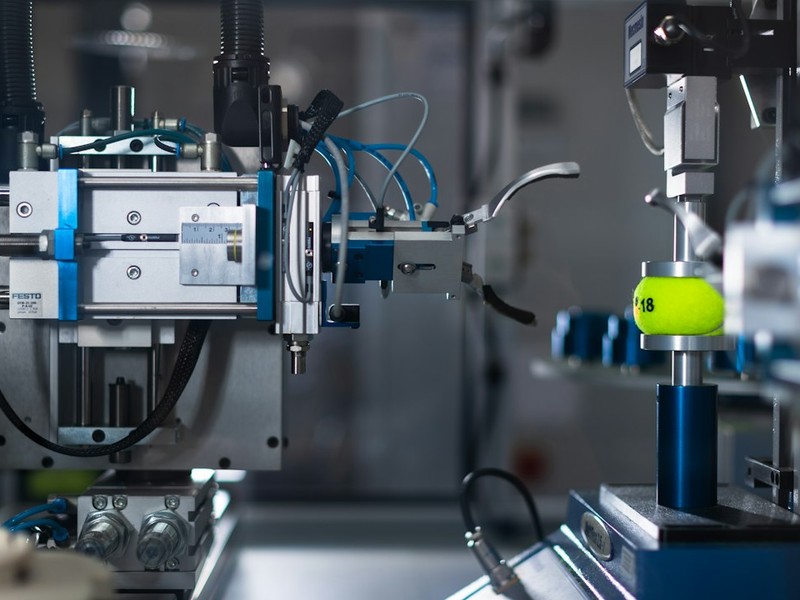
Asynchronous Data Collection System for Real-Time Bearing Monitoring
A New Approach to Real-Time Bearing Monitoring
Bearing testing has always involved a trade-off: the more bearings you monitor at once, the harder it becomes to capture clean, synchronized data. A newly published patent application for an asynchronous data collection system aims to close that gap, offering a practical solution for engineers who need reliable operating data from multiple bearings running on separate test setups.
The patent, filed in May 2024 and published in September 2024, describes a system built specifically to collect data generated while bearings are in operation. It targets two common problems in bearing test labs: data lag during simultaneous testing of several bearings, and the difficulty of obtaining accurate results when multiple test facilities operate on non-synchronized schedules.
How the Asynchronous Data Collection System Works
The core idea is straightforward. Instead of forcing every test rig onto a single clock, the system lets each bearing trigger its own data capture the moment it starts running. The architecture is built around paired detection units and data collection interfaces:
- A set of N detection units (where N is a natural number of two or more), each assigned to monitor one bearing under test.
- Each detection unit emits a signal when its bearing begins to rotate.
- A matching set of N data collection interfaces receives those signals and immediately starts capturing operating data for the corresponding bearing.
- All captured data is transmitted to a central control unit for processing and storage.
Because each channel activates independently, a delay on one test rig does not corrupt the data from another. This is the key advantage over conventional synchronized acquisition setups, where a slow channel can hold back the entire test batch.
What Gets Measured
The system is designed to capture the operating parameters that matter most in bearing evaluation. According to the patent overview, these include but are not limited to:
- Rotational speed
- Operating temperature
- Vibration behavior
These three parameters form the backbone of most bearing performance assessments. Speed data confirms whether the test is running at the intended condition. Temperature rise reveals friction, lubrication, and load issues. Vibration signatures expose raceway defects, cage problems, and misalignment long before a bearing fails. Capturing all three consistently across multiple test stands is what makes the asynchronous approach valuable.
Why This Matters for Bearing Engineers
In real-world test environments, rigs are rarely perfectly synchronized. One stand may start minutes after another. Operators may stagger tests to manage power, cooling, or staffing. Under a traditional synchronized acquisition model, these offsets create gaps and misaligned timestamps that complicate analysis.
An asynchronous system resolves this by pushing intelligence to the edge of each test channel. Each detection unit acts independently, so data capture begins exactly when the bearing starts moving. The control center then receives a clean, time-stamped stream from every channel. For engineers running endurance tests, comparative studies, or qualification batches, this means fewer invalid runs and more confidence in the results.
The design also scales naturally. Because the system is defined by N detection units and N interfaces, adding another test stand is a matter of adding another matched pair rather than re-engineering the entire acquisition network.
Practical Implications for Bearing Selection and Quality Control
Better test data feeds directly into better bearing decisions. When engineers can trust the speed, temperature, and vibration readings from every unit in a test batch, they can compare designs more fairly, validate lubrication strategies faster, and catch quality escapes earlier.
This matters across product families. Whether you are qualifying a precision ball bearing for a high-speed spindle, validating a precision roller bearing for heavy radial loads, or testing a precision slewing bearing for slow-rotation applications, the quality of your monitoring setup determines the quality of your conclusions.
At FIJ, we follow developments like this closely because they reflect where bearing testing and quality assurance are heading: more channels, more data, and less tolerance for measurement lag. As test systems become more flexible, the feedback loop between design, manufacturing, and field performance gets shorter.
The asynchronous data collection concept is a reminder that bearing performance is not just about materials and geometry. It is also about how well we observe and measure what happens inside a running bearing. As test rigs grow more complex and batches grow larger, systems that capture data independently and reliably will become a standard part of the bearing engineer’s toolkit.