
7309BEAT7 angular contact ball bearing 45×100mm
News & Updates
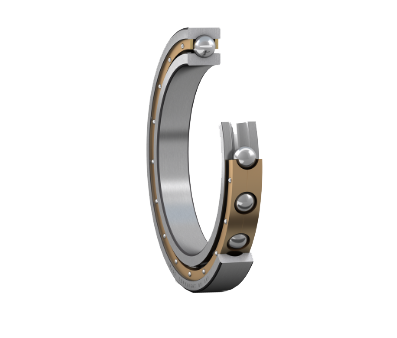
7309BEAT7 angular contact ball bearing 45×100mm
Compared with a deep groove ball bearing on the same 45 mm shaft, the 7309BEAT7 gives up some radial simplicity in exchange for controlled axial stiffness, higher speed potential, and a single-row layout that keeps the envelope compact. It is also a different proposition from a cylindrical roller bearing: the angular contact design is aimed at combined radial and axial duty where location matters, not at maximum radial capacity in a purely radial application. The practical question is not whether it is better in isolation, but whether the duty cycle actually needs one-direction axial control at this bore size.
At a glance
- Parameter: Value
- Model: 7309BEAT7
- Bearing type: Single row angular contact ball bearing
- Bore diameter (d): 45 mm
What the 7309BEAT7 suffix and cage mean in service
The model is a 73 series single row angular contact ball bearing with a cylindrical bore, a 45 mm inside diameter, a 100 mm outside diameter, and a 25 mm width. Those boundary dimensions put it in a common medium-duty shaft size, but the suffix matters as much as the envelope. The T7 callout is an L-PPS resin cage. In service, that cage choice is about low mass, low friction, and stable running at speed rather than about raising the published load ratings. It does not remove the need to check lubricant compatibility, cleaning agents, and heat exposure.
For suffix interpretation across the range, the bearing number reference is a useful starting point, but a production order should still be checked against the controlled drawing. The reference speed of 6290 r/min and limiting speed of 8795 r/min are a good first screen. They are not a license to run continuously at the limit in every housing. Mounting stiffness, preload, oil flow or grease life, and heat rejection all move the usable speed.
Single-row load direction: the mounting decision comes first
A single row angular contact bearing is often misapplied because buyers read axial capacity as if it were bidirectional. In most arrangements, one bearing takes axial load in one direction; the opposite direction needs a second bearing, a pair, or another locating feature. The bearing should therefore be selected after the axial load direction and the locating/floating scheme are clear. If the shaft can be pushed both ways in service, a single bearing on its own is the wrong starting point.
That does not make the bearing fragile; it makes the arrangement important. The 45 mm bore and 100 mm outside diameter suit compact gearboxes, pump shafts, blower shafts, and auxiliary spindles where the axial load is defined and the housing can provide a proper abutment. Check shoulder heights, fillet clearance, and face squareness before ordering. Preload also belongs in this discussion. Too little preload can allow ball skidding at high speed; too much adds friction and heat. Copying a preload value from a different shaft is not a selection method.
Key data that frames the selection
Use the fixed values below for preliminary sizing. They are not a substitute for the detail drawing, but they tell you quickly whether the bearing is in the right capacity and speed class for the duty.
| Parameter | Value |
|---|---|
| Model | 7309BEAT7 |
| Bearing type | Single row angular contact ball bearing |
| Bore diameter (d) | 45 mm |
| Outside diameter (D) | 100 mm |
| Width (B) | 25 mm |
| Basic dynamic radial load rating (Cr) | 64833 N |
| Basic static radial load rating (Cor) | 38800 N |
| Reference speed | 6290 r/min |
| Limiting speed | 8795 r/min |
| Weight | 0.823 kg |
The Cr value of 64833 N and Cor value of 38800 N are radial ratings. For an angular contact bearing, the equivalent load calculation must include the axial component and the load direction. Do not compare these numbers directly with a deep groove bearing of the same bore without recalculating equivalent load. The 0.823 kg weight matters for handling and balance checks, while the 25 mm width sets the axial space in the housing.
Applications where this duty profile fits
This bearing is happiest in medium-duty rotating equipment where radial load is moderate, axial load is steady or well defined, and speed is high enough that a resin cage and controlled contact geometry make sense. Typical fits include helical gear reducers that produce a known thrust direction, pumps with an impeller-generated axial load, fan and blower shafts with a located rotor, and some machine tool auxiliary spindles. In those duties, the single-row layout can provide axial stiffness without the width of a double-row bearing.
It is less attractive in pure radial duty where a deep groove or cylindrical roller bearing would do the job at lower cost. It is also not the first choice for heavy shock loading, severe misalignment, or reversing axial loads unless the arrangement includes an opposing bearing. For other sizes and variants in this family, compare the Single row angular contact ball bearings category before narrowing the drawing.
Operating conditions that change the recommendation
Speed is the first condition to challenge. The reference speed assumes a defined thermal state and lubrication condition; the limiting speed is a mechanical boundary, not a normal continuous operating point. If the application runs near 8795 r/min, confirm oil lubrication, preload control, and heat removal. Grease life at that speed may be the real constraint even when the bearing is mechanically capable.
Load ratio is the second. A single row angular contact bearing can carry axial load, but the radial and axial components act together. If axial load dominates or changes direction, ask for an arrangement review rather than simply increasing the bearing size. Temperature and contamination are the third. The L-PPS resin cage offers low friction and good dimensional stability, but it still needs a lubricant and environment that suit the actual operating temperature. Solvent cleaning, aggressive process fluids, and poor sealing can shorten service life regardless of the load rating.
Finally, check alignment and fit. A 45 mm cylindrical bore needs the right interference for the shaft and housing; too loose invites creep, too tight can alter preload and internal clearance. Single row angular contact bearings have limited self-aligning ability, so housing and shaft alignment should be verified during assembly, not assumed from the bearing drawing.
Pre-order checks before releasing a purchase order
Before the bearing goes on a purchase order, run a short technical review. The list below catches most costly mismatches:
- Confirm the axial load direction and identify the opposing bearing or locating feature.
- Recalculate equivalent dynamic and static loads from the actual radial and axial duty.
- Check continuous speed, lubrication method, preload, and heat rejection against 6290 r/min reference and 8795 r/min limiting values.
- Verify L-PPS cage compatibility with the lubricant, cleaning fluids, and operating temperature.
- Review 45 mm shaft and 100 mm housing fits, shoulder squareness, and fillet clearance.
- Confirm grease quantity or oil flow path, especially if the shaft runs at high speed.
- Check the controlled drawing for suffix details, marking, and inspection requirements.
These checks are not paperwork. They are the difference between a bearing that reaches its rating life and one that overheats because the housing preloads it in the wrong direction. If any item is unclear, resolve it before comparing quotations.
Ordering context and quotation details
A model number alone does not describe a reliable bearing application. When you request a quote for this model, include the duty cycle, axial load direction, speed, lubrication method, shaft and housing fits, and the quantity needed for the first build and service stock. If the bearing is part of a matched arrangement, say so; the opposing bearing and preload method belong in the same review.
FIJ Bearing can review the application against the 45×100×25 envelope and the T7 L-PPS resin cage, then confirm the drawing and inspection requirements for your order. For a fast response, send the operating conditions with your inquiry rather than just the model number.
Request a quote: contact FIJ with your 7309BEAT7 duty details and target quantity for a quotation.