
6202T1XVVP4 deep groove ball bearing 15×35mm
News & Updates
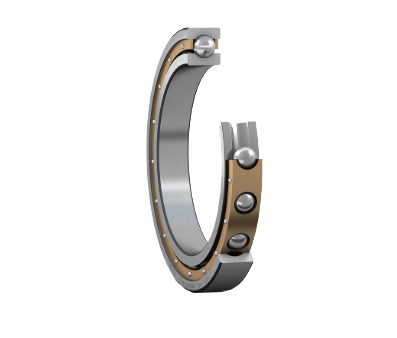
6202T1XVVP4 deep groove ball bearing 15×35mm
A general-purpose 6202 and the 6202T1XVVP4 share the same 15×35×11 envelope, and on paper either will carry a light spindle load. In practice they fail for completely different reasons. The commodity bearing usually dies of fatigue after a long, noisy decline; the super-precision version tends to fail early and suddenly, and the cause is almost always something outside the rolling contact itself — contamination, cage temperature, or a fit that was never measured.
At a glance
- Parameter: Value
- Model number: 6202T1XVVP4
- Series: 62 series (62..T1XVVP4)
- Bore diameter d: 15 mm
That distinction matters during troubleshooting. Replace a 6202T1XVVP4 with the same part number and the same installation habits, and the second failure will usually repeat the first within the same number of running hours. The brief below covers the four failure modes we see most often on this part, their root causes, and the countermeasures that actually work.
What the 6202T1XVVP4 is built to do, and where it stops being forgiving
The bearing is a single-row, 62 series deep groove ball bearing with a cylindrical 15 mm bore, a 35 mm outside diameter and an 11 mm width. Its T1X cage is a ball-guided polyamide resin cage: low friction, a healthy ball complement, but a cage that depends on the lubricant film for both cooling and guidance. The published limiting speed of 27,717 r/min says what the part is for — high-speed, low-to-moderate-load duty where running accuracy and low torque matter more than raw capacity.
| Parameter | Value |
|---|---|
| Model number | 6202T1XVVP4 |
| Series | 62 series (62..T1XVVP4) |
| Bore diameter d | 15 mm |
| Outside diameter D | 35 mm |
| Width B | 11 mm |
| Basic dynamic load rating Cr | 7592 N |
| Basic static load rating Cor | 3710 N |
| Limiting speed | 27717 r/min |
| Cage | T1X ball-guided polyamide resin |
The ratings set the boundary. With 7592 N dynamic and 3710 N static, this is not a bearing to overload in the hope that a precision class will compensate. Equally, a super-precision bearing has a far smaller misalignment budget than a standard one; a housing that is acceptable for a commodity 6202 may be enough to edge-load this part and shorten its life by half. Dimensional and tolerance data for the series sit in our Deep groove ball bearings, super-precision category.
Failure mode 1: contamination that begins as a dent
Most early failures on small precision bearings are contamination failures, and they rarely look like it. A particle of 5–10 µm trapped between ball and raceway leaves a dent whose shoulders stand a few tenths of a micrometre proud. Every subsequent pass raises local contact stress at those shoulders until a spall opens — often weeks later, and usually blamed on the bearing.
The usual entry routes are unremarkable. Machining swarf left in a blind housing bore, grease applied with a dirty spatula, a labyrinth gap that opens up when the housing warms, parts unwrapped on the bench hours before fitting. On a 15 mm bore bearing the raceway is narrow enough that a single dent can sit squarely in the load zone.
Countermeasures are procedural more than technical: assemble on a clean bench, keep the part in its packaging until the moment of fitting, use filtered grease and a calibrated dispenser, and treat the housing seal as the primary barrier rather than assuming the bearing’s own closure will handle it. If a failed unit shows denting rather than fatigue, fix the environment before you fit the replacement.
Failure mode 2: cage heat and lubricant starvation
Polyamide cages fail from temperature, not from load. Continuous ring temperature above roughly 100–120 °C, depending on resin grade and lubricant, softens the material; a starved contact then lets the balls skid, and skidding pushes the temperature higher still. The end state is pocket wear, cage eccentricity, and eventually a fractured cage or a skewed ball.
Because the T1X cage is ball-guided, it rides directly on the balls. That is efficient when the film is intact and unforgiving when it is not — there is no outer-ring land to share the guidance duty. Check these points when you suspect a heat or starvation problem:
- Measure outer-ring temperature at steady state, not housing temperature; a 10–15 °C difference is common and enough to change a grease life estimate completely.
- Confirm the grease base-oil viscosity against the actual n·dm speed factor, not against a catalogue default.
- For continuous running close to the limiting speed, prefer oil-air or oil-mist over grease.
- Inspect removed cages for polished, discoloured or worn pockets — the signature of sustained skidding.
- Keep acceleration ramps gentle; a fast start on a cold, stiff grease causes more skid than hours of steady running.
Failure mode 3: fit errors, preload and thermal growth
On a 15 mm cylindrical bore, fit choice changes internal clearance faster than most people expect. A light interference of a few micrometres on the shaft is normal for a rotating inner ring, but an axial clamp that preloads the assembly, or a housing shoulder that is not square, removes clearance asymmetrically. The bearing runs hot on one side, the grease degrades locally, and the failure appears to come from nowhere.
Thermal growth is the second half of this mode. A spindle running at speed grows, and a bearing that was correctly set cold can become heavily preloaded when hot. The symptom is a temperature that climbs steeply in the first twenty minutes and a whine that shifts with speed rather than with load. Roundness and squareness errors of 2–3 µm matter here; measure them with a form tester, not a caliper. Also check whether the outer ring is loaded in the rotating direction — if it is, creep and fretting corrosion will mark the housing bore long before the raceway shows anything.
Failure mode 4: damage that happens while the machine is standing still
Not every failure is dynamic. False brinelling shows as evenly spaced axial marks at the ball pitch, and it develops in bearings that sit still under vibration: a machine in transit, a spindle on a test stand, a pump on a skid. The lubricant is squeezed out of the contact, the surfaces fret, and the marks become stress raisers that later spall.
Electrical erosion is increasingly common now that spindles are driven by inverters. Shaft voltage discharges through the rolling contact and leaves either a grey, frosted raceway or a fluted pattern at the ball pitch. Shaft grounding rings, an insulated housing or a hybrid ceramic ball variant are the standard remedies. Both of these modes feel perfectly smooth by hand until they are advanced, which is why they are missed during incoming inspection.
Reading the evidence and avoiding a repeat failure
Pull the bearing before it seizes, and read the raceway. A single band of damage on one side of the outer ring points to misalignment or to a load direction assumption that was wrong. A full 360° pattern suggests an unbalanced or overhung load. Marks at the ball pitch with no spalling indicate false brinelling, and a frosted finish indicates electrical discharge.
Record baseline vibration and temperature at commissioning, then compare spectra at each service interval. Bearing frequencies and their harmonics tell you which element is deteriorating, and faint cage-frequency sidebands are an early warning of pocket wear — the cheapest possible time to intervene.
If you are substituting the 6202T1XVVP4 with another part, confirm what the suffix actually controls; our bearing number reference explains how cage, clearance and precision designations stack up. Two bearings with identical 15×35×11 geometry can differ in resin grade, clearance and running accuracy, and those differences decide whether the replacement lasts or repeats the failure.
If you are working through a specific application, send us the duty cycle, fit data and photographs of the failed raceway — FIJ Bearing engineers will review the failure pattern with you and confirm the correct specification. Request a quote from FIJ for the 6202T1XVVP4 or an equivalent super-precision alternative.