
387AR/382R tapered roller bearing 57.15×98.425mm
News & Updates
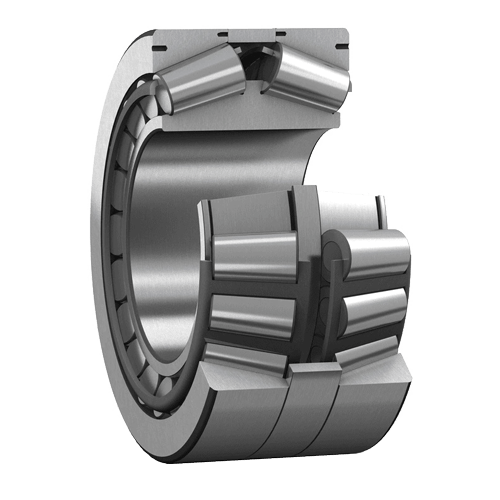
387AR/382R tapered roller bearing 57.15×98.425mm
The 387AR/382R carries a basic dynamic radial load rating of 98,845 N while weighing only 0.646 kg. That ratio is the first clue that this inch-series tapered roller bearing is not a commodity part; it is a compact assembly engineered to keep a radial load path stiff without adding unnecessary rotating mass. For buyers, the number matters because it changes the trade-off between bearing size, shaft stiffness, and service life before a single mounting dimension is checked.
At a glance
- Specification: Value
- Model: 387AR/382R
- Type: Single row inch design tapered roller bearing
- Dimensions (d × D × B): 57.15 mm × 98.425 mm × 21 mm
Load ratings: what 98,845 N and 96,842 N actually tell a buyer
For the 387AR/382R, the published basic dynamic radial load rating is 98845 N and the basic static radial load rating is 96842 N. The dynamic figure is the one to use when the bearing rotates under load and fatigue life is the concern. The static figure is the one to watch during standstill, shock, mounting, or high-peak events. The two values are close, which is typical for a tapered roller bearing with a stiff roller-to-race contact path; it tells the engineer that the bearing has useful capacity both in continuous running and in non-rotating peak-load situations.
Tapered roller bearings also carry combined radial and axial loads, so the rating should not be read as radial-only in practice. The radial rating gives a comparable baseline. In a real application, the axial component, lubrication, alignment, and internal clearance or preload affect heat and life. A buyer comparing quotes should ask for the rating basis and the allowable axial load for the intended setting, not only the headline radial number.
| Specification | Value |
|---|---|
| Model | 387AR/382R |
| Type | Single row inch design tapered roller bearing |
| Dimensions (d × D × B) | 57.15 mm × 98.425 mm × 21 mm |
| Weight | 0.646 kg |
| Series | 300AR |
| Cage | Pressed steel or pin type |
| Bore | Cylindrical |
| Basic dynamic load rating radial (Cr) | 98845 N |
| Basic static load rating radial (Cor) | 96842 N |
| Speed ratings | 3560 r/min reference; 4952 r/min limiting |
The 0.646 kg weight is part of the same story. A low mass for this load class reduces inertia and makes handling easier during cup-and-cone assembly. It also helps when the housing is thin or when the bearing sits at the end of a shaft where every gram of unsprung or overhung mass affects vibration. Weight alone should not decide the selection, but it is a useful cross-check against counterfeit or substituted parts.
Speed, cage, and lubrication boundaries
The reference speed for this bearing is 3560 r/min and the limiting speed is 4952 r/min. Treat these as boundaries, not targets. The reference speed gives a thermal baseline for comparison under defined conditions; the limiting speed is the higher ceiling that depends on lubrication, heat dissipation, cage design, and mounting. A 387AR/382R running near the limiting speed needs a lubrication review, not just a catalog check.
The cage is listed as pressed steel or pin type. Pressed steel is common in volume tapered roller bearing production and suits many steady-load applications. Pin-type cages are chosen when the application needs stronger roller guidance, higher load, or more resistance to shock and reversing conditions. Because the cage can vary, a buyer should state the expected duty rather than assume the default. A bearing that is correct on dimensions but wrong on cage and lubrication can fail early even when the load rating looks adequate.
Before releasing an order, confirm:
- Actual operating speed, including startup, coast-down, and any overspeed condition.
- Lubricant type, viscosity, fill quantity, and expected temperature range.
- Shock, vibration, and reversing-load content that affects cage choice.
- Shaft and housing fit, seal space, and axial setting method.
These checks are especially important for single-row inch tapered roller bearings because the cup and cone are usually mounted separately and the final bearing setting is created by the surrounding hardware.
Dimensions and fits: 57.15 × 98.425 × 21 mm
The 387AR/382R uses a 57.15 mm bore, a 98.425 mm outside diameter, and a 21 mm width. In inch terms the bore is 2.25 in and the outside diameter is 3.875 in, which is consistent with the inch design and the 300AR series. The cylindrical bore is straightforward for shaft machining, but the split cup-and-cone construction means the fit is only half the job. Axial clearance or preload must be set at assembly using shims, nuts, or a designed housing shoulder.
For buyers, the critical dimension is not only the nominal d × D × B. Check the cup width, cone width, fillet radii, and shaft shoulder clearance against the drawing. A bearing can match the headline dimensions and still foul a shoulder or seal if the corner radii are ignored. As part of our Single row inch tapered roller bearings category, this model is normally specified with the mating cup and cone identified together.
The 300AR series designation and the 387AR/382R number should be cross-checked with your bearing number reference before ordering. Inch bearing numbers often combine a cone number and a cup number; the slash in this model is a useful reminder that the assembly is matched. If a supplier quotes only one half or substitutes a metric envelope, the load path and setting behavior will not be equivalent.
Supply verification and quote preparation
A 387AR/382R quote should include more than a price and a lead time. Ask for the material specification, heat treatment, cage type, dimensional inspection report, and traceability for the lot. The load ratings are only meaningful if the raceways, rollers, and cage meet the drawing and if the bearing is protected from contamination before installation. For maintenance buyers, confirm that the packaging preserves the cup-and-cone pair and that the markings remain legible after storage.
The best RFQ is short but complete: quantity, target speed, radial and axial loads, lubrication, operating temperature, shaft and housing fits, and the axial setting method. If the application is a replacement, include the original mounting sketch or the measured shoulder dimensions. That information lets FIJ check the 387AR/382R against the real duty rather than the catalog page alone.
As a precision bearing manufacturer, FIJ Bearing can review the application, confirm the cage and lubrication options, and supply the matched assembly with inspection data. Request a quote from FIJ with your annual quantity and the operating conditions above; the technical check is the fastest way to avoid a dimensionally correct but functionally wrong replacement.